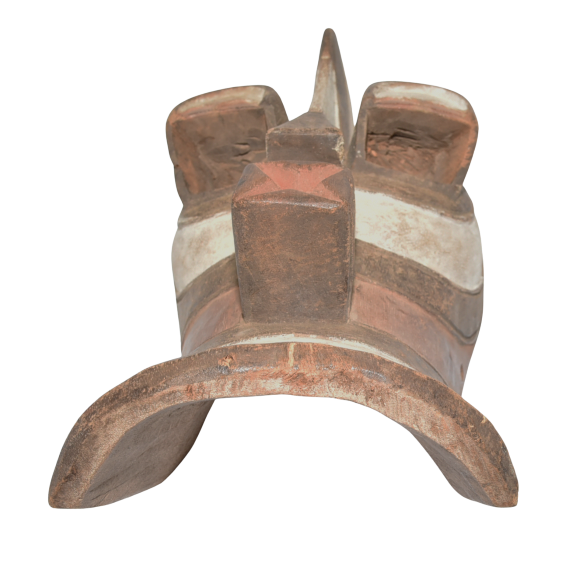
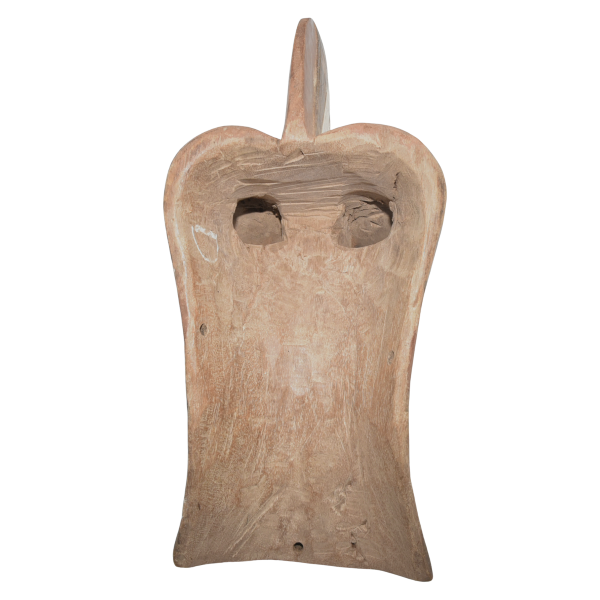
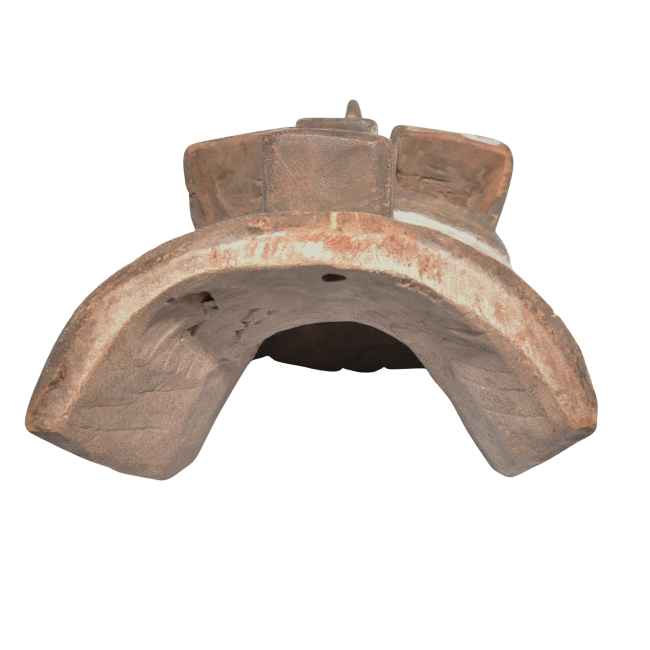
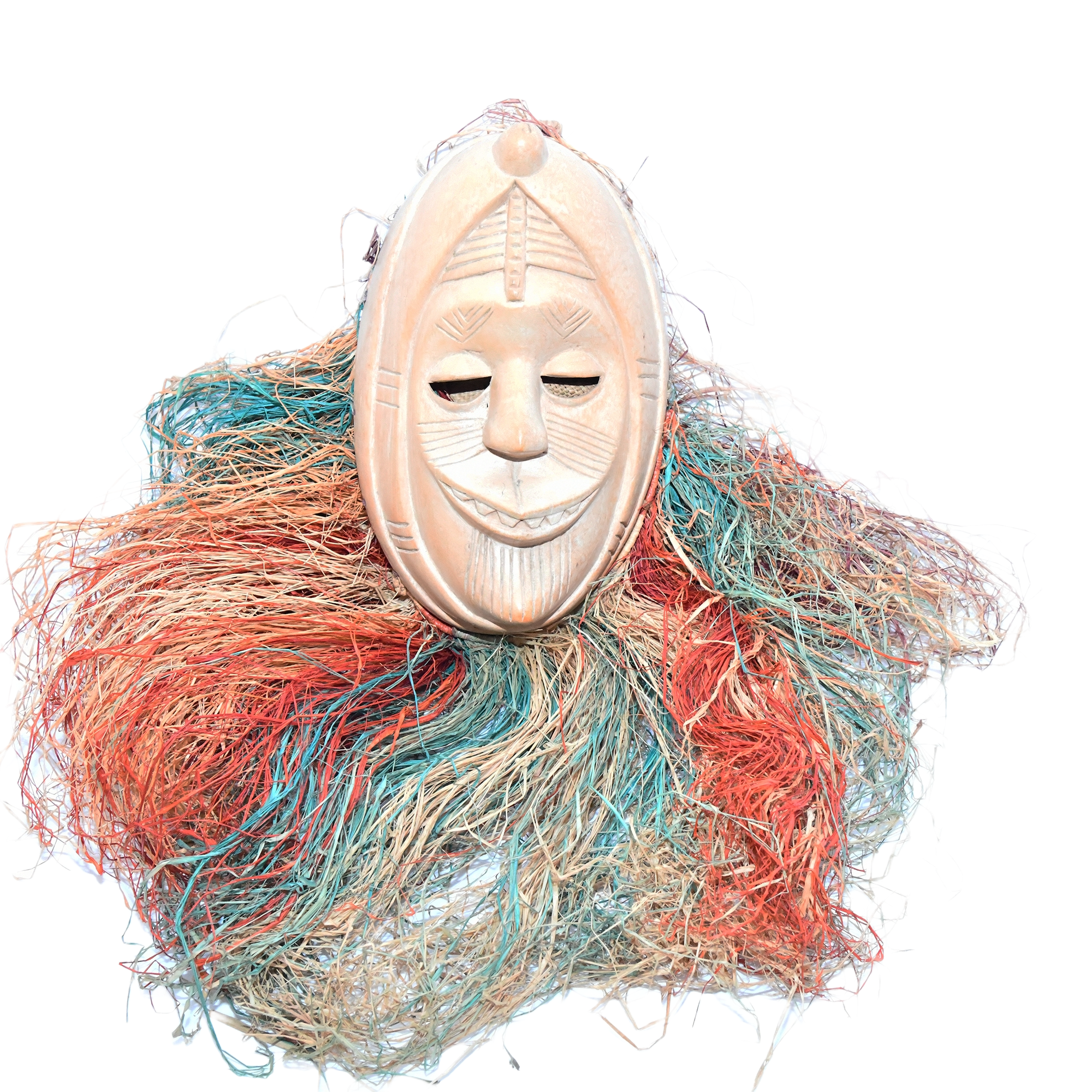
Date: Circa early 20th century
Geography: Democratic Republic of the Congo
Culture: Pende
Dimensions: 33cm H x 18cm W x 10cm D
Weight: 374g
Material: Wood and natural pigments
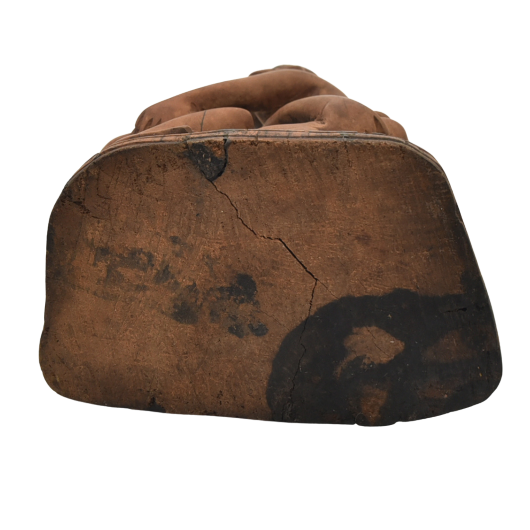
Condition: Good for its age, with some wear to the pigment, see photos
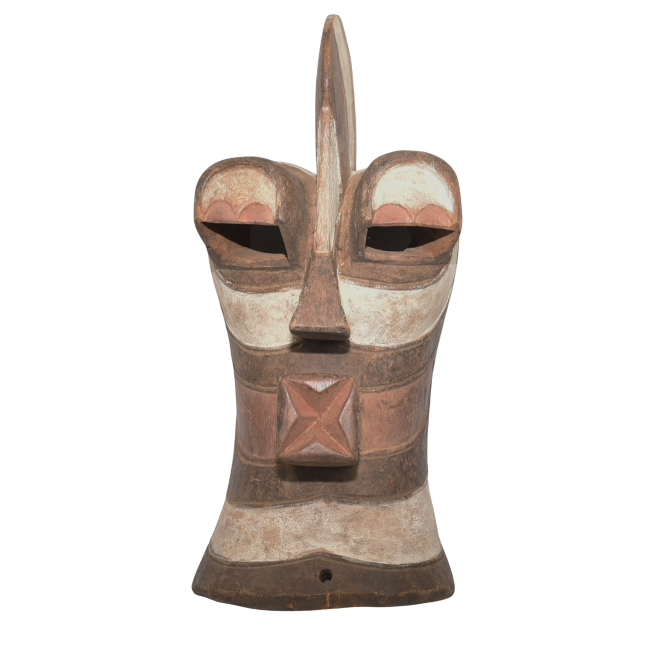
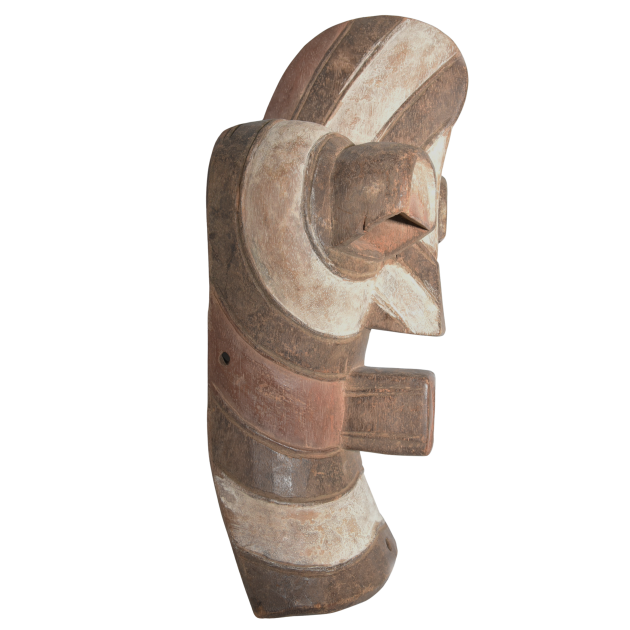
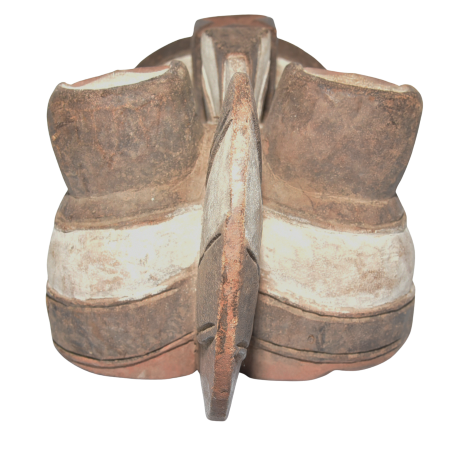
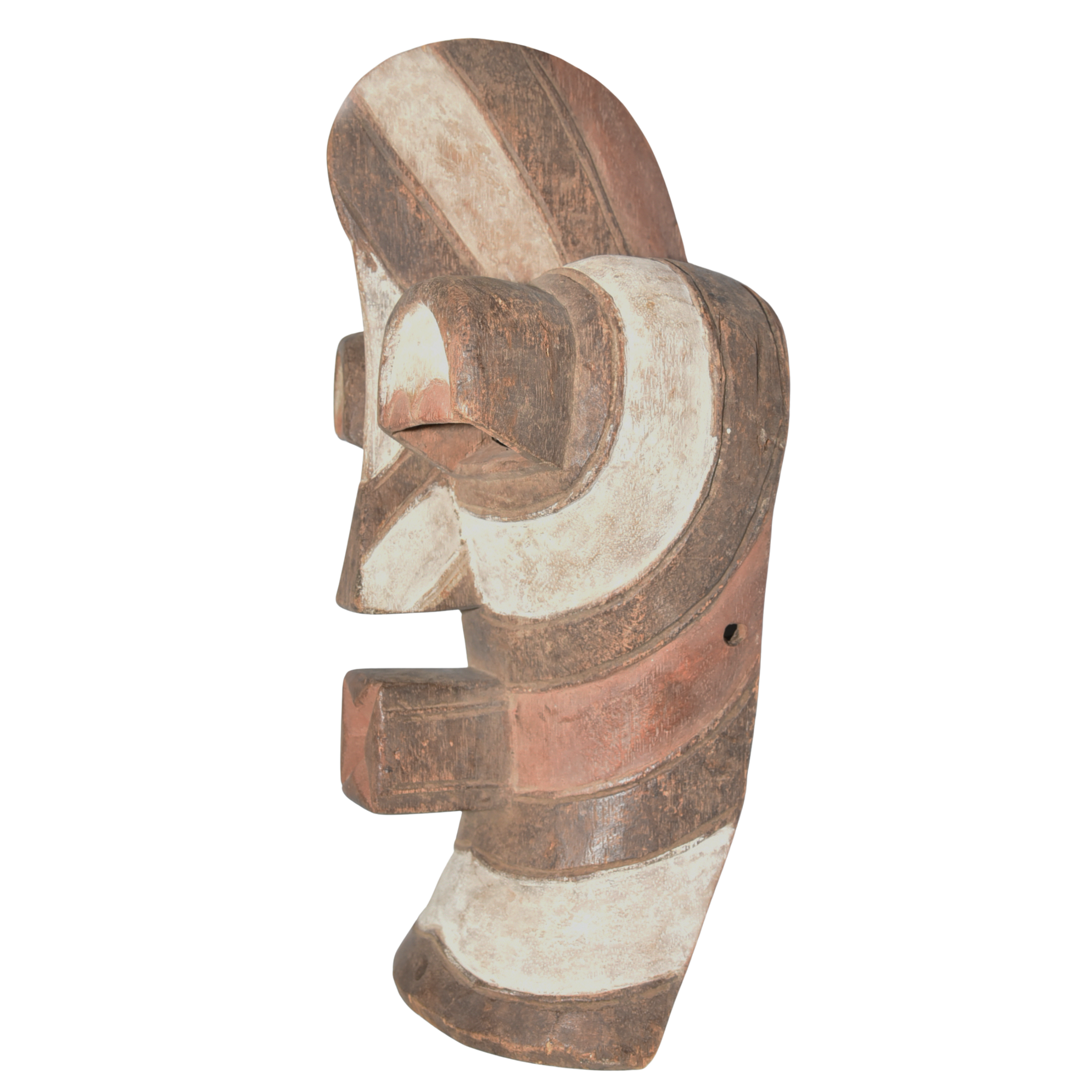
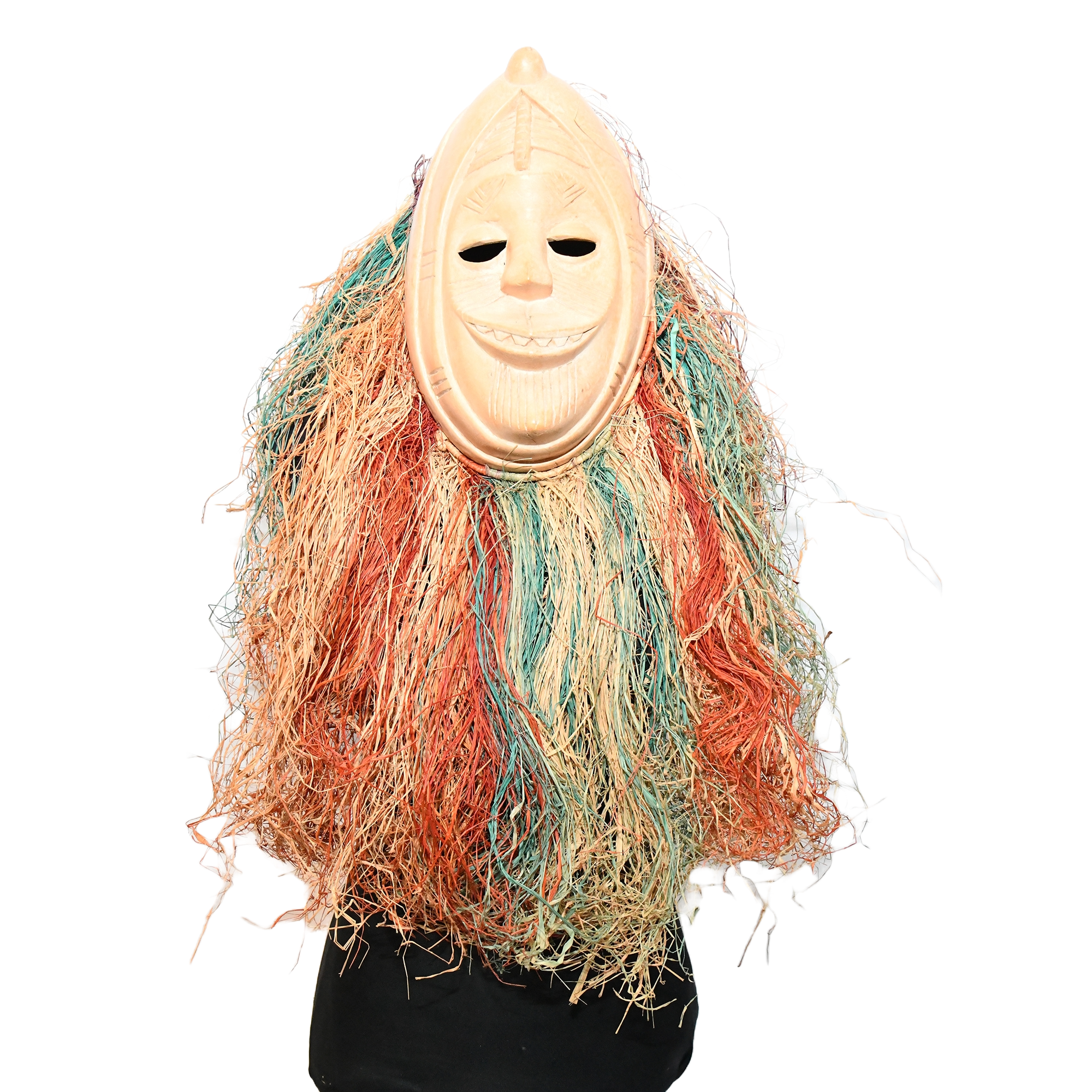
This carved wooden mask is a Pende mbangu mask, sometimes called the “malade” or sickness mask, from the Democratic Republic of the Congo. Its face is divided down the middle, half whitened with kaolin clay and half coloured with red ochre, and framed by a dark, sculpted coiffure.
Mbangu masks represent a person afflicted by illness, often believed to be caused by sorcery, misfortune or wrongdoing. The distorted features, with a twisted nose and mouth and uneven eyes, show the effects of the affliction, while the split colouring is often said to represent the contrast between sickness and health.
In Pende masquerades, the mbangu character appears as a warning against harmful behaviour and a reminder of the importance of good conduct, while also expressing hope for healing.
As with all our antique and vintage pieces, this mask is one of a kind, and natural variations in pigment, surface wear and carving should be expected as part of its authentic character and history. Dimensions and weight are approximate.

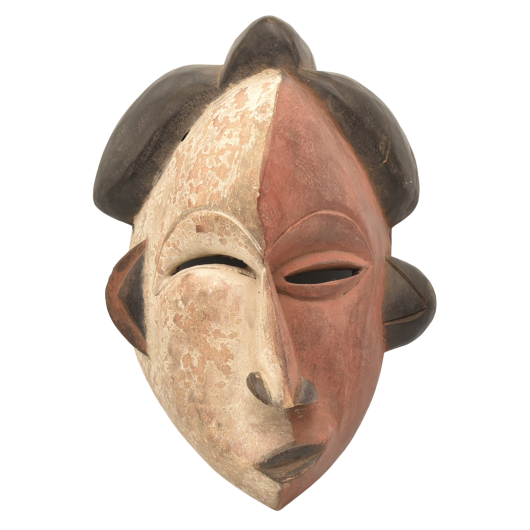 Image 1 of 6
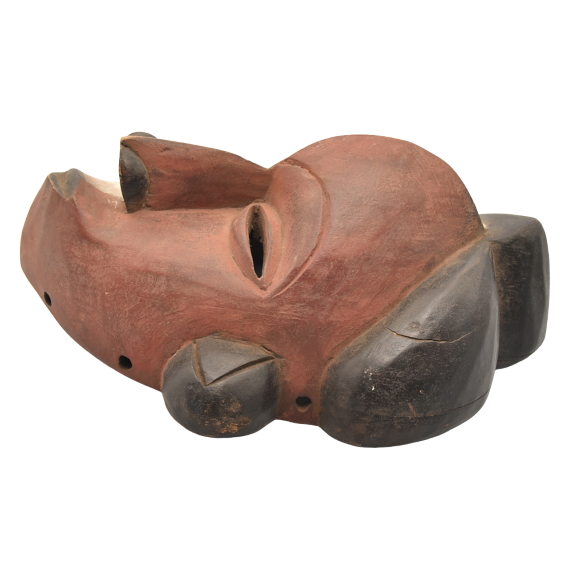 Image 2 of 6
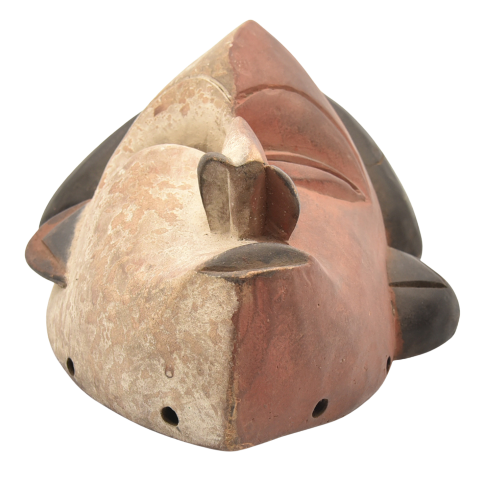 Image 3 of 6
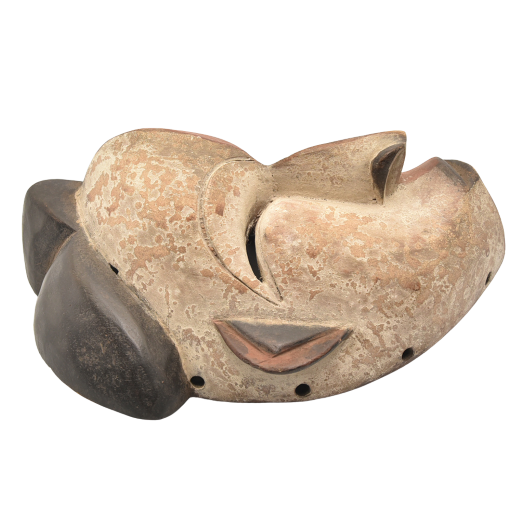 Image 4 of 6
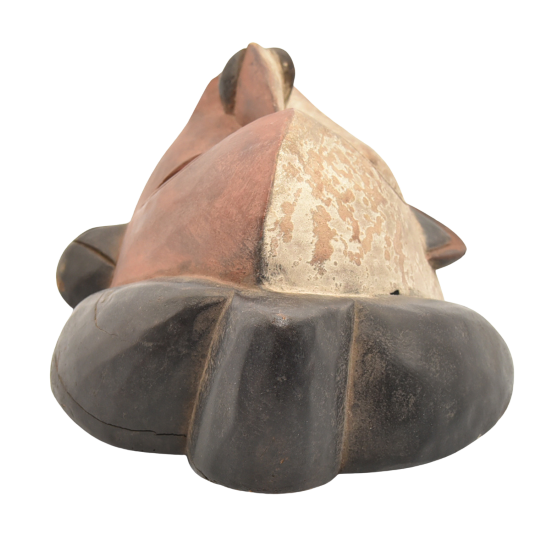 Image 5 of 6
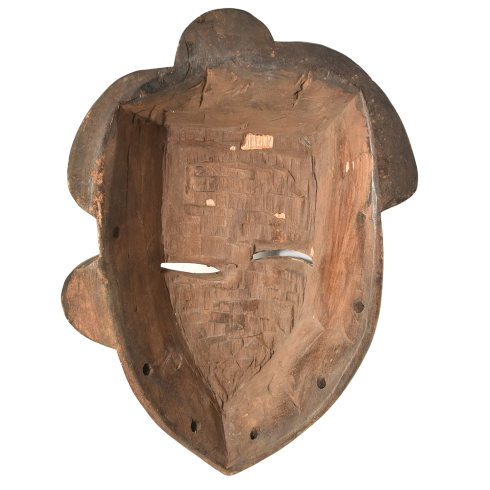 Image 6 of 6