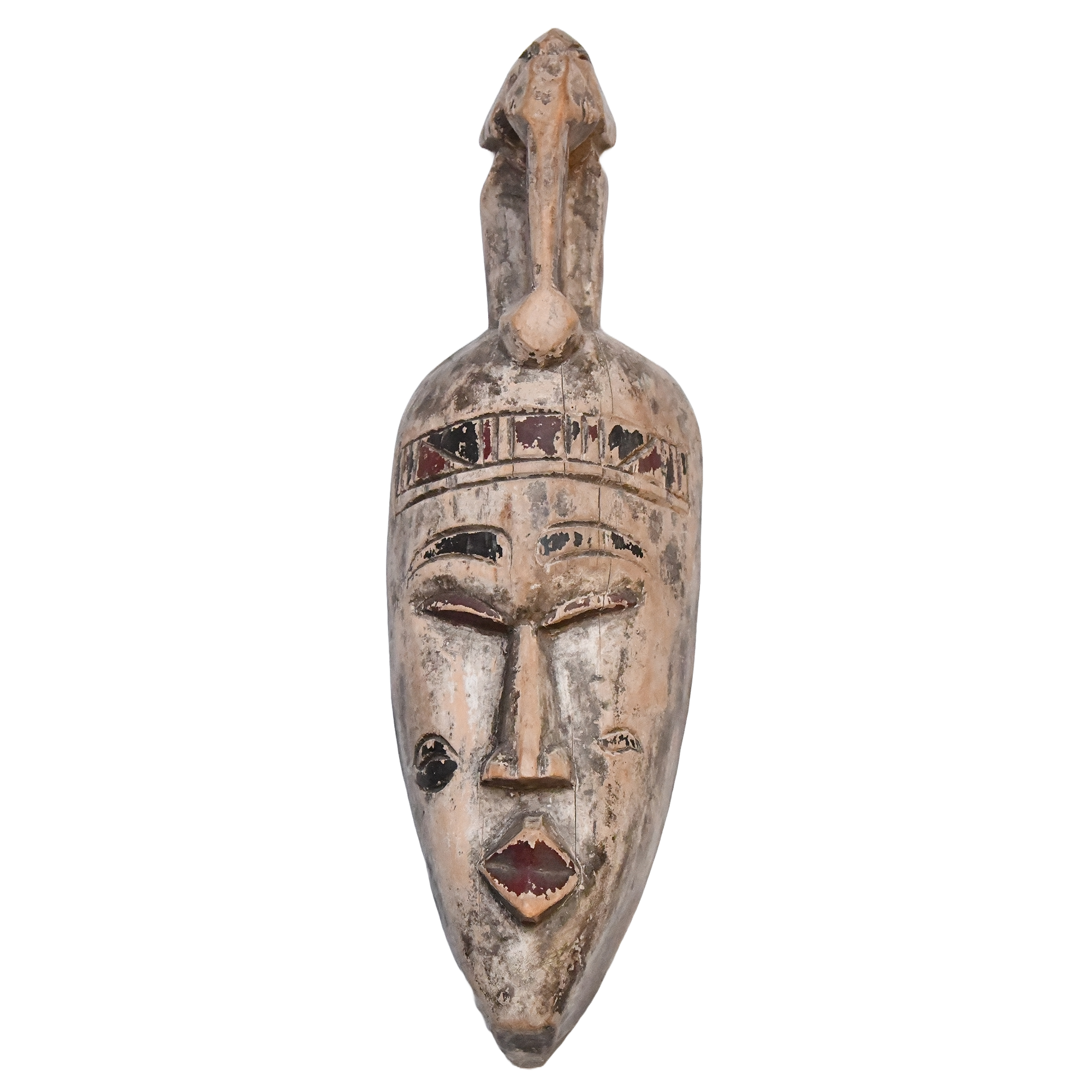
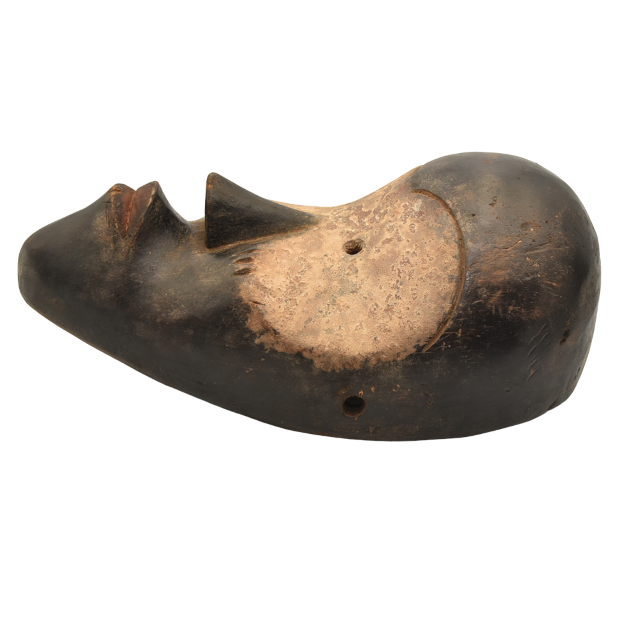
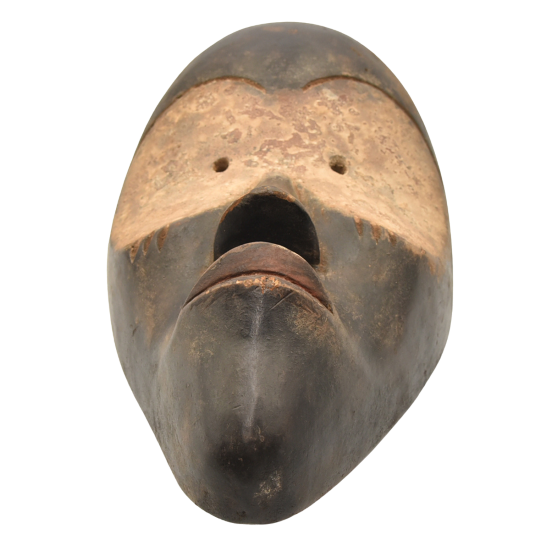
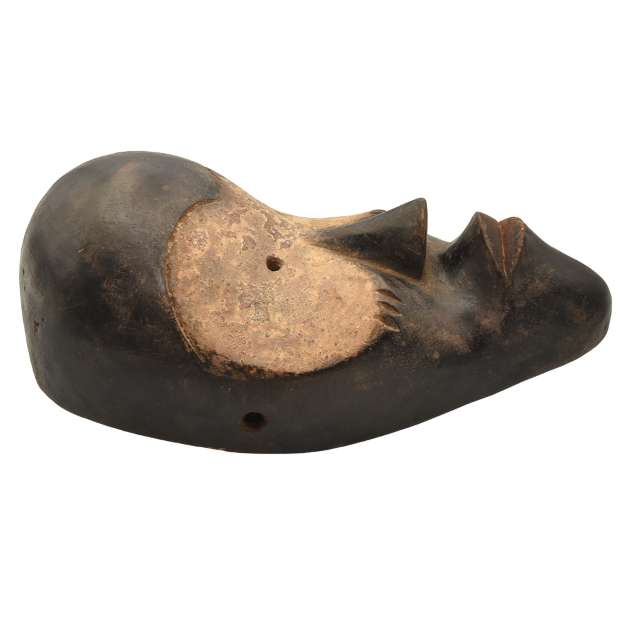
 Image 1 of 5
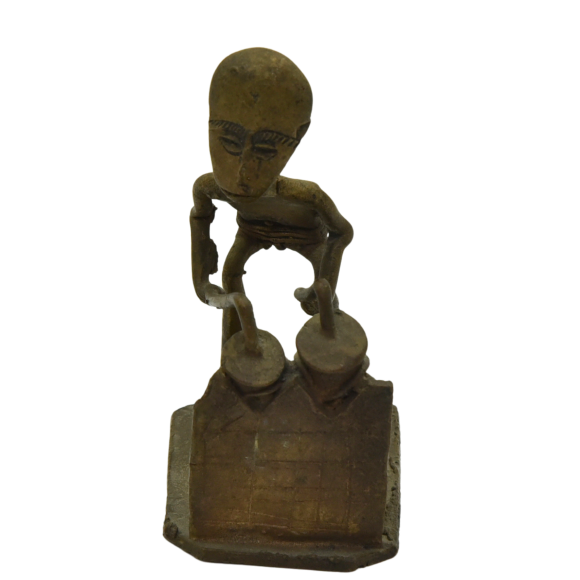 Image 2 of 5
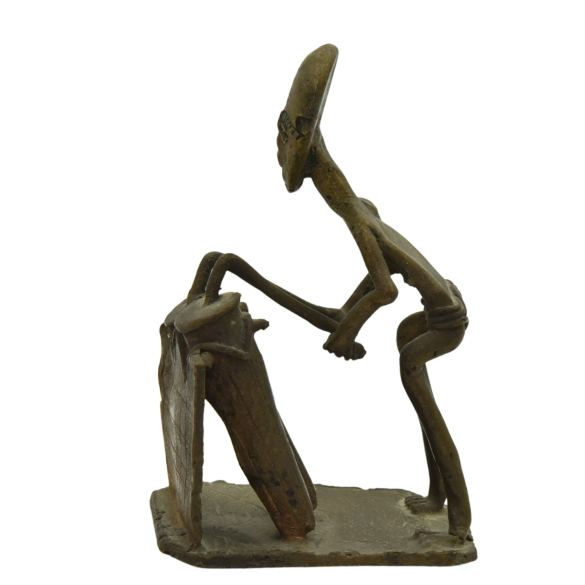 Image 3 of 5
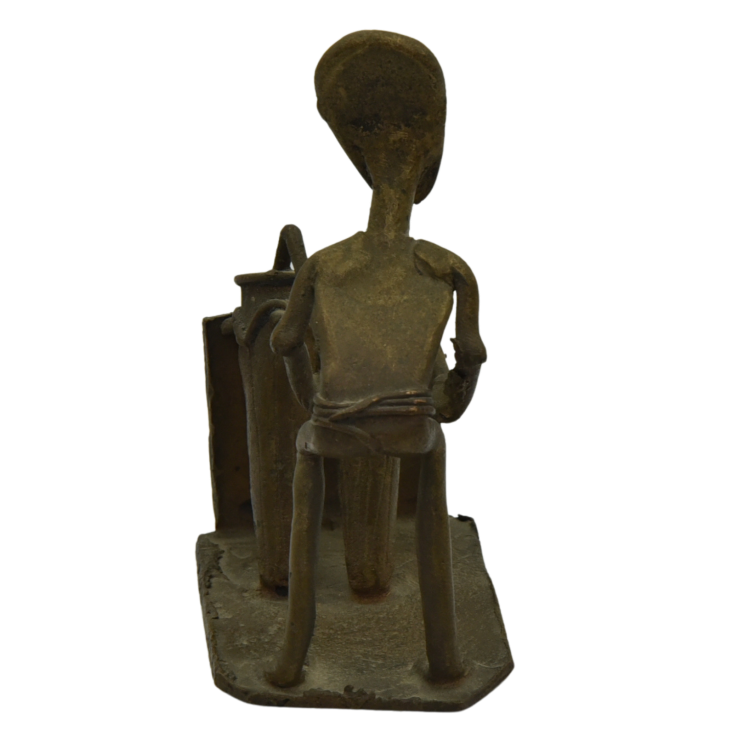 Image 4 of 5
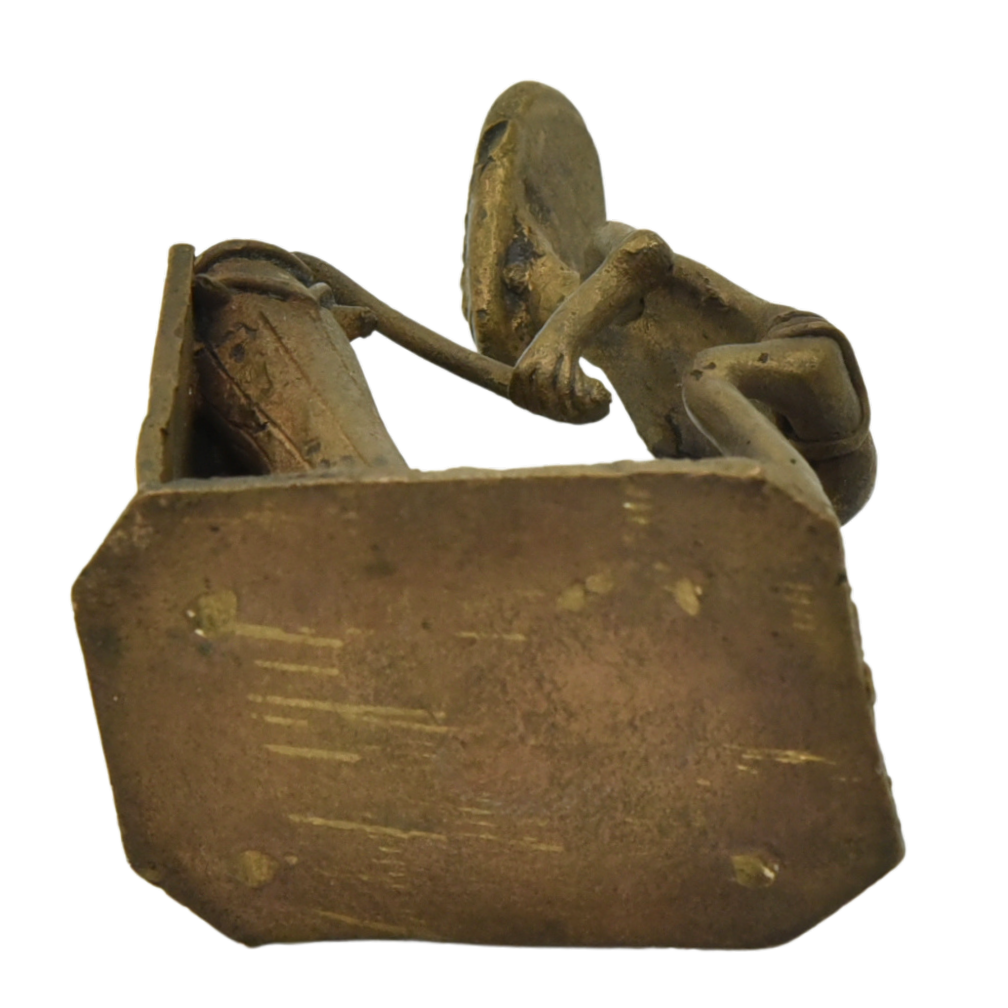 Image 5 of 5
Date: late 19th to early 20th century
Geography: Africa
Dimensions: 10cm H x 5cm W x 7cm D
Weight: 305g
Material: bronze
Condition: good - see photos
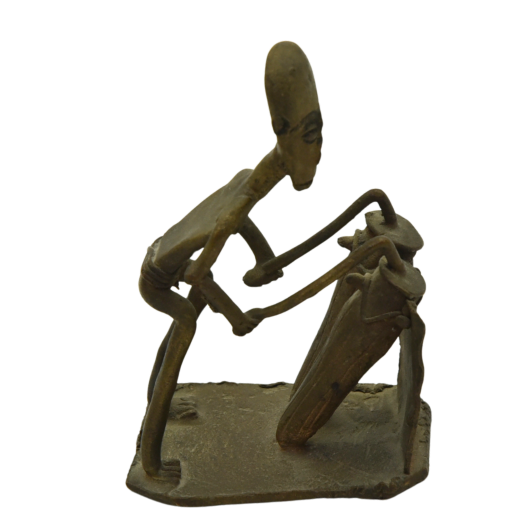
This antique Ashanti bronze gold weight depicts a man playing a drum and was made by the Akan people of present-day Ghana, West Africa. Cast in bronze using the traditional lost-wax method, the figure served as a goldweight, known locally as a mrammou. These objects were used for measuring gold dust, which was the principal currency in much of the region before the introduction of colonial coinage.
Gold weights played an important role in trade from around the 15th century until the late 19th and early 20th centuries. Merchants used sets of weights to ensure fair and accurate transactions when buying and selling goods. Each weight was individually cast, and many represented people, animals, tools, or scenes from everyday life. As a result, no two collections were exactly alike.
This example shows a seated or standing figure playing a drum, reflecting the importance of music and oral traditions within Akan society. Figurative goldweights often carried symbolic meanings and could be linked to proverbs, historical events, or social values. These miniature sculptures served not only as practical trading tools but also as objects that communicated cultural knowledge and identity.
Ownership of a substantial collection of gold weights was often associated with wealth, status, and participation in commerce. Collections could be passed down through generations and were sometimes presented as wedding gifts, helping a groom establish himself within the merchant community.
Today, Ashanti goldweights are valued for their historical significance, craftsmanship, and insight into the economic and cultural life of the Akan people. This bronze figure is both a functional artefact from West Africa's trading history and a distinctive example of traditional Ashanti metalwork.
Read more
www.naturallycrafted.co.uk/blog/2026/8/6/the-history-of-ashanti-gold-weights
Date: late 19th to early 20th century
Geography: Africa
Dimensions: 10cm H x 5cm W x 7cm D
Weight: 305g
Material: bronze
Condition: good - see photos
This antique Ashanti bronze gold weight depicts a man playing a drum and was made by the Akan people of present-day Ghana, West Africa. Cast in bronze using the traditional lost-wax method, the figure served as a goldweight, known locally as a mrammou. These objects were used for measuring gold dust, which was the principal currency in much of the region before the introduction of colonial coinage.
Gold weights played an important role in trade from around the 15th century until the late 19th and early 20th centuries. Merchants used sets of weights to ensure fair and accurate transactions when buying and selling goods. Each weight was individually cast, and many represented people, animals, tools, or scenes from everyday life. As a result, no two collections were exactly alike.
This example shows a seated or standing figure playing a drum, reflecting the importance of music and oral traditions within Akan society. Figurative goldweights often carried symbolic meanings and could be linked to proverbs, historical events, or social values. These miniature sculptures served not only as practical trading tools but also as objects that communicated cultural knowledge and identity.
Ownership of a substantial collection of gold weights was often associated with wealth, status, and participation in commerce. Collections could be passed down through generations and were sometimes presented as wedding gifts, helping a groom establish himself within the merchant community.
Today, Ashanti goldweights are valued for their historical significance, craftsmanship, and insight into the economic and cultural life of the Akan people. This bronze figure is both a functional artefact from West Africa's trading history and a distinctive example of traditional Ashanti metalwork.
Read more
www.naturallycrafted.co.uk/blog/2026/8/6/the-history-of-ashanti-gold-weights