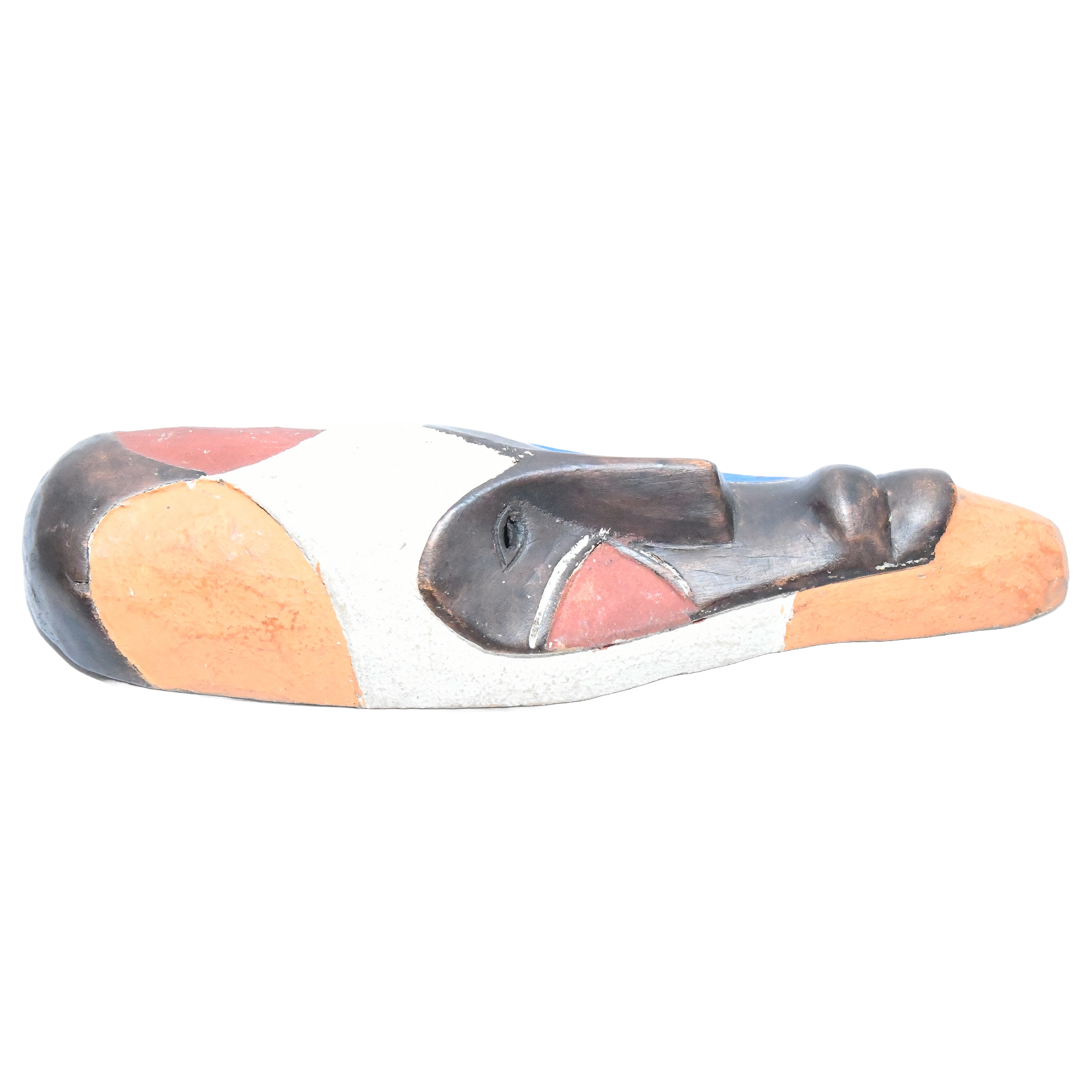
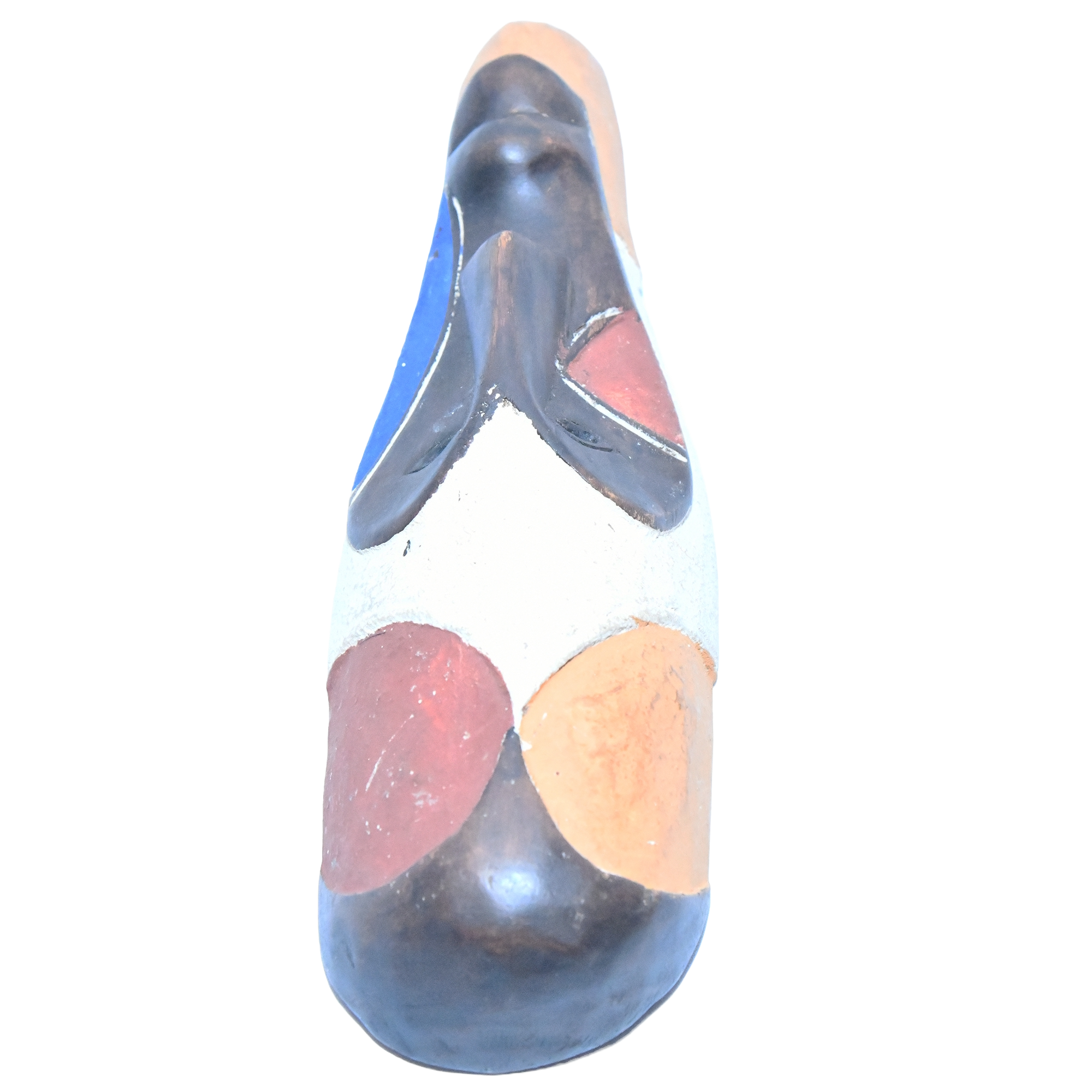
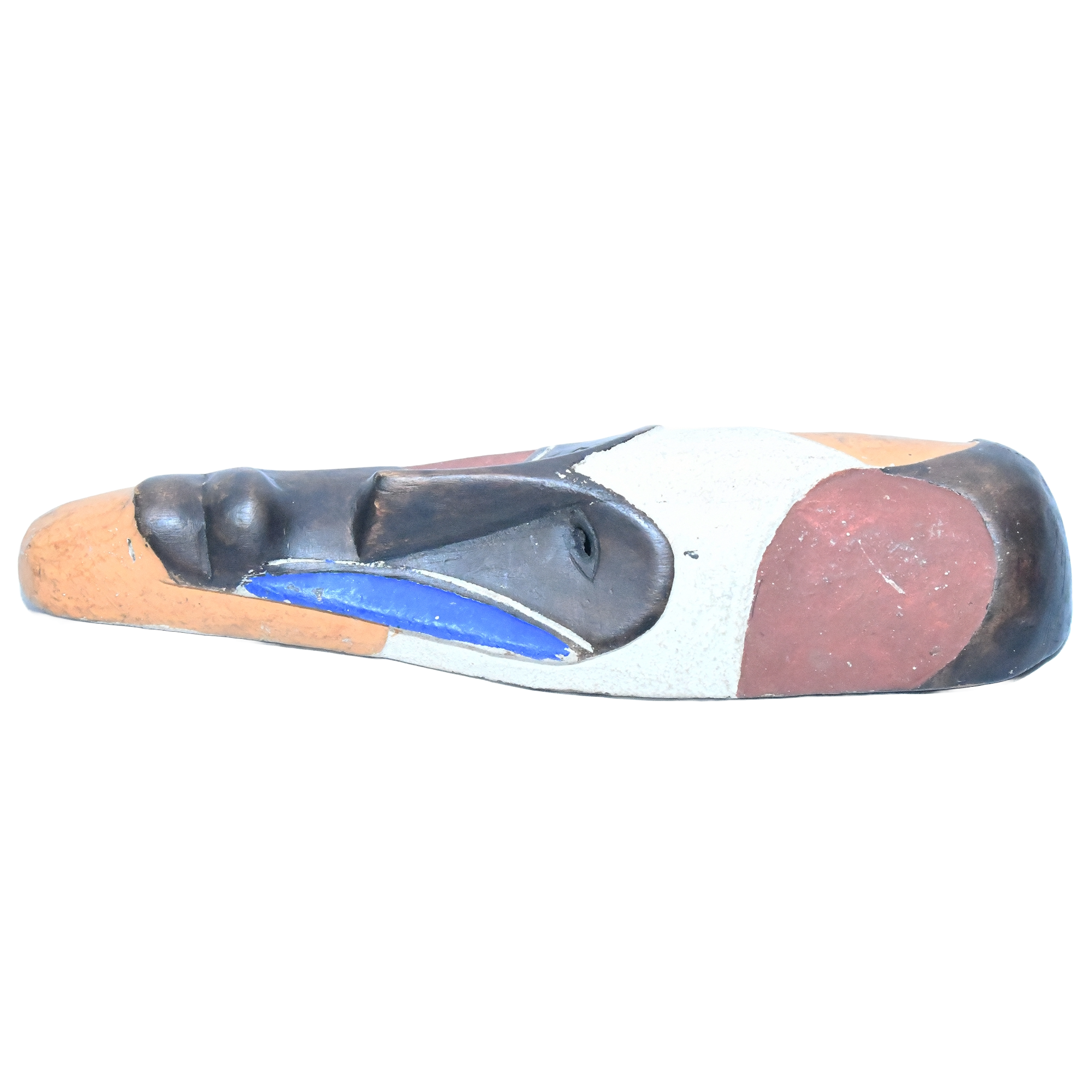
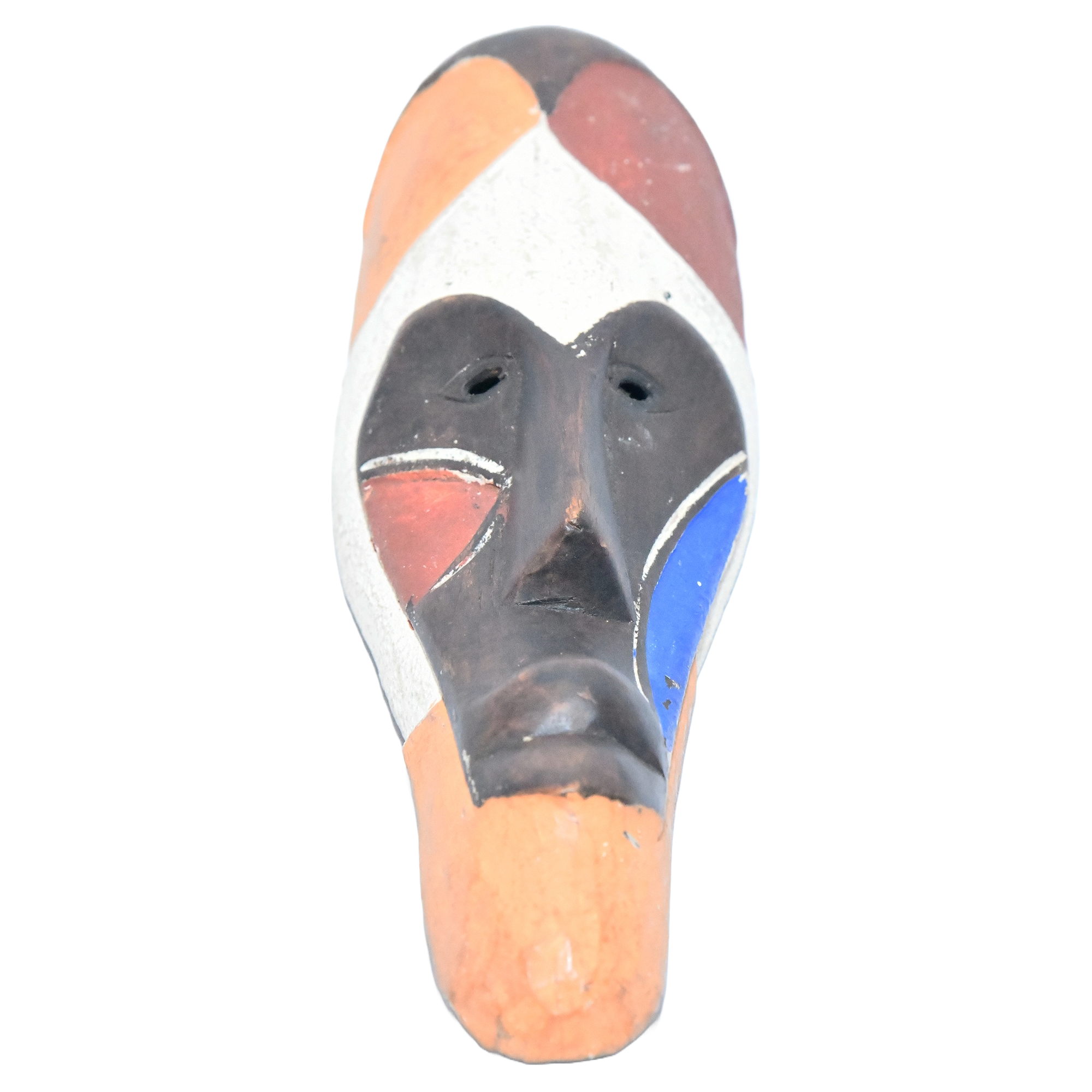
Date: early to mid 20th century
Geography: Nigeria, West Africa
Dimensions: 36cm H 12cm W x 16cm D
Weight: 2.888kg
Material: bronze
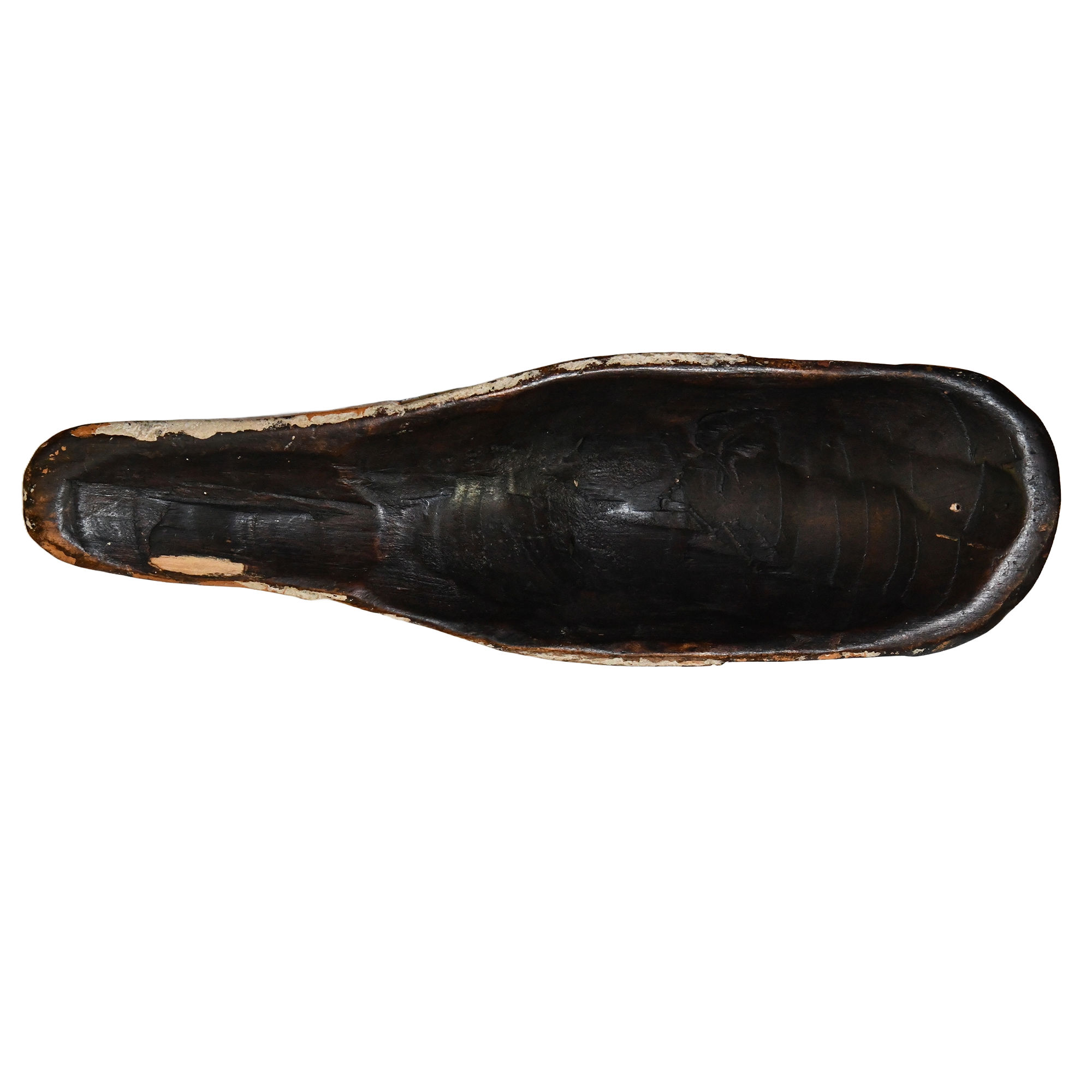
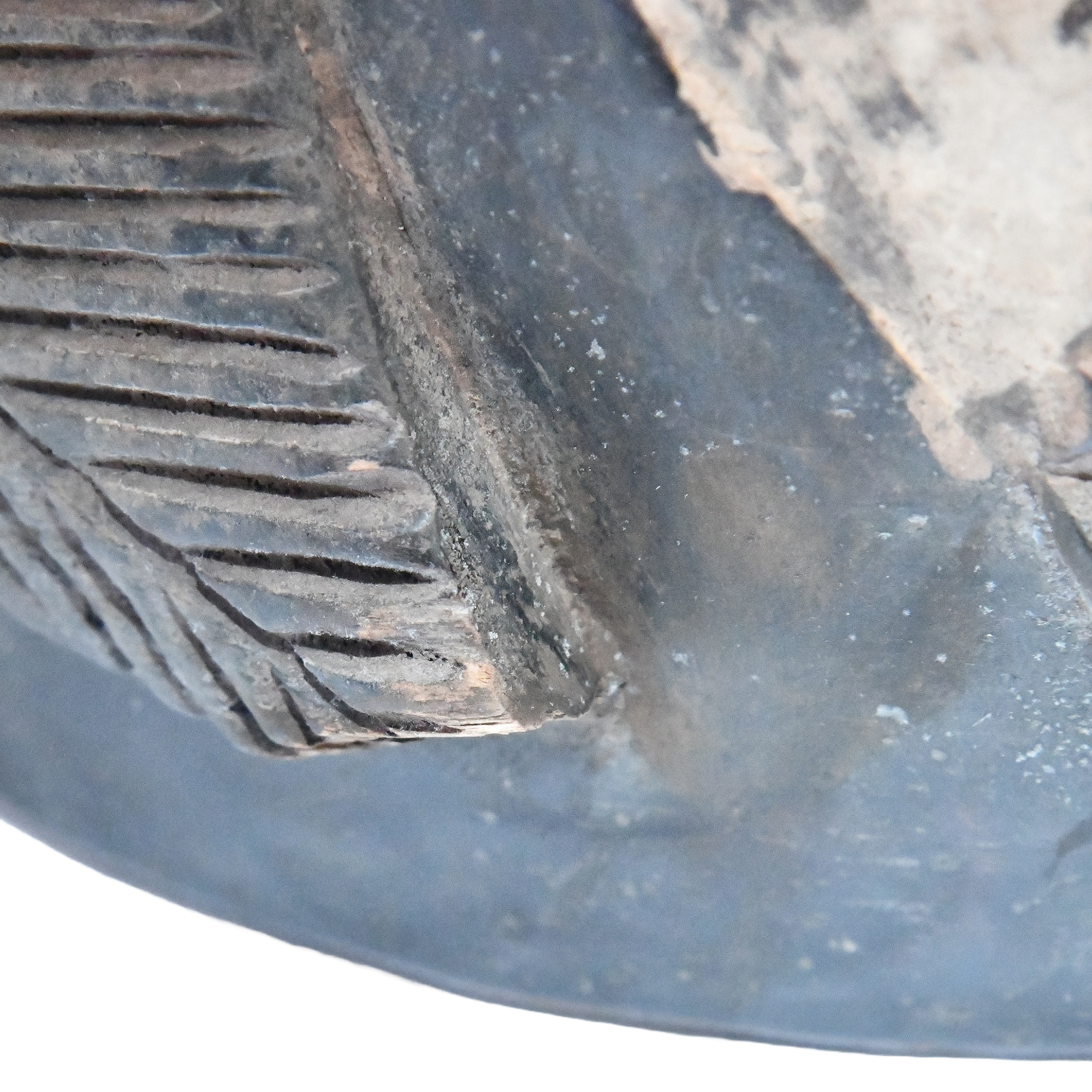
Condition: is good see photos
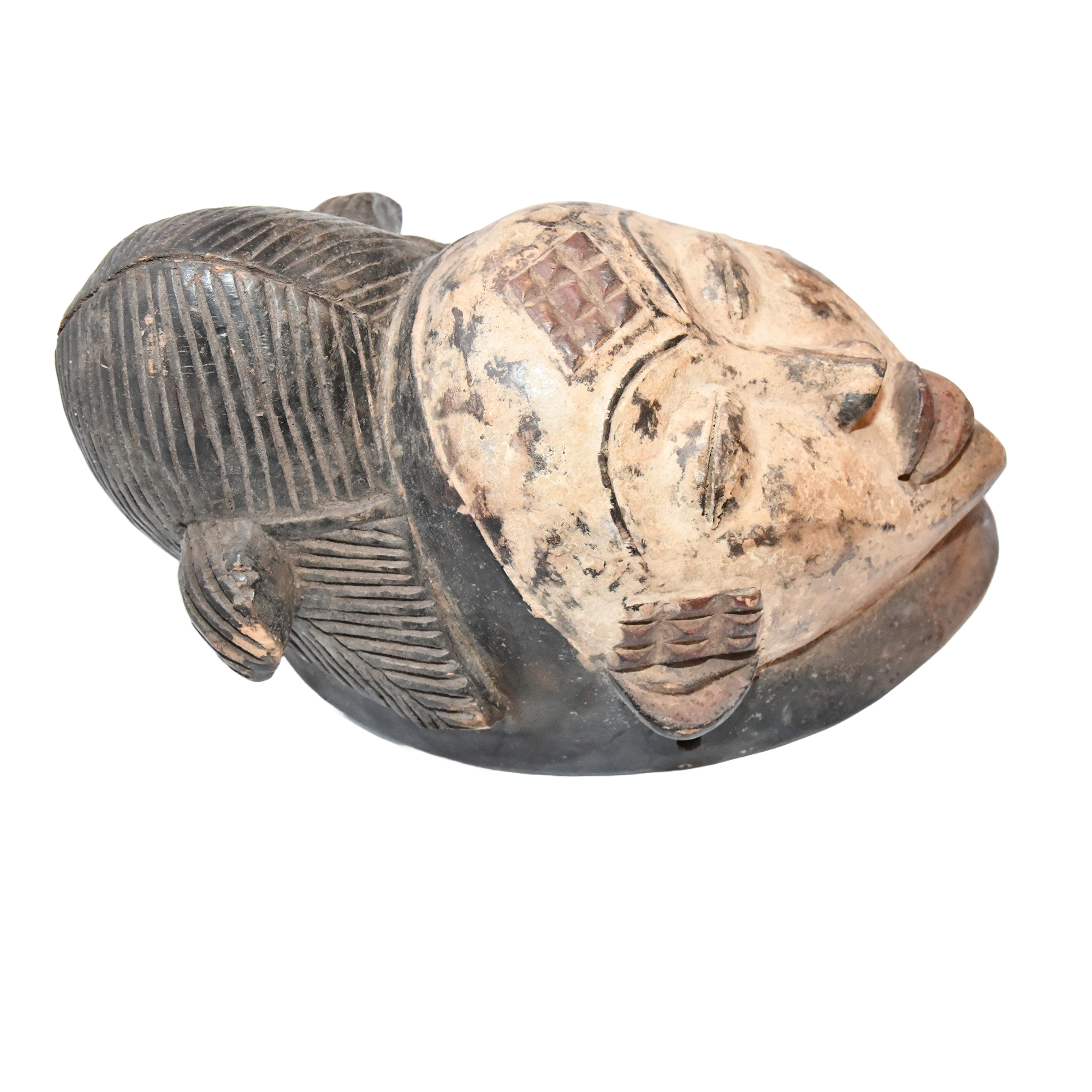
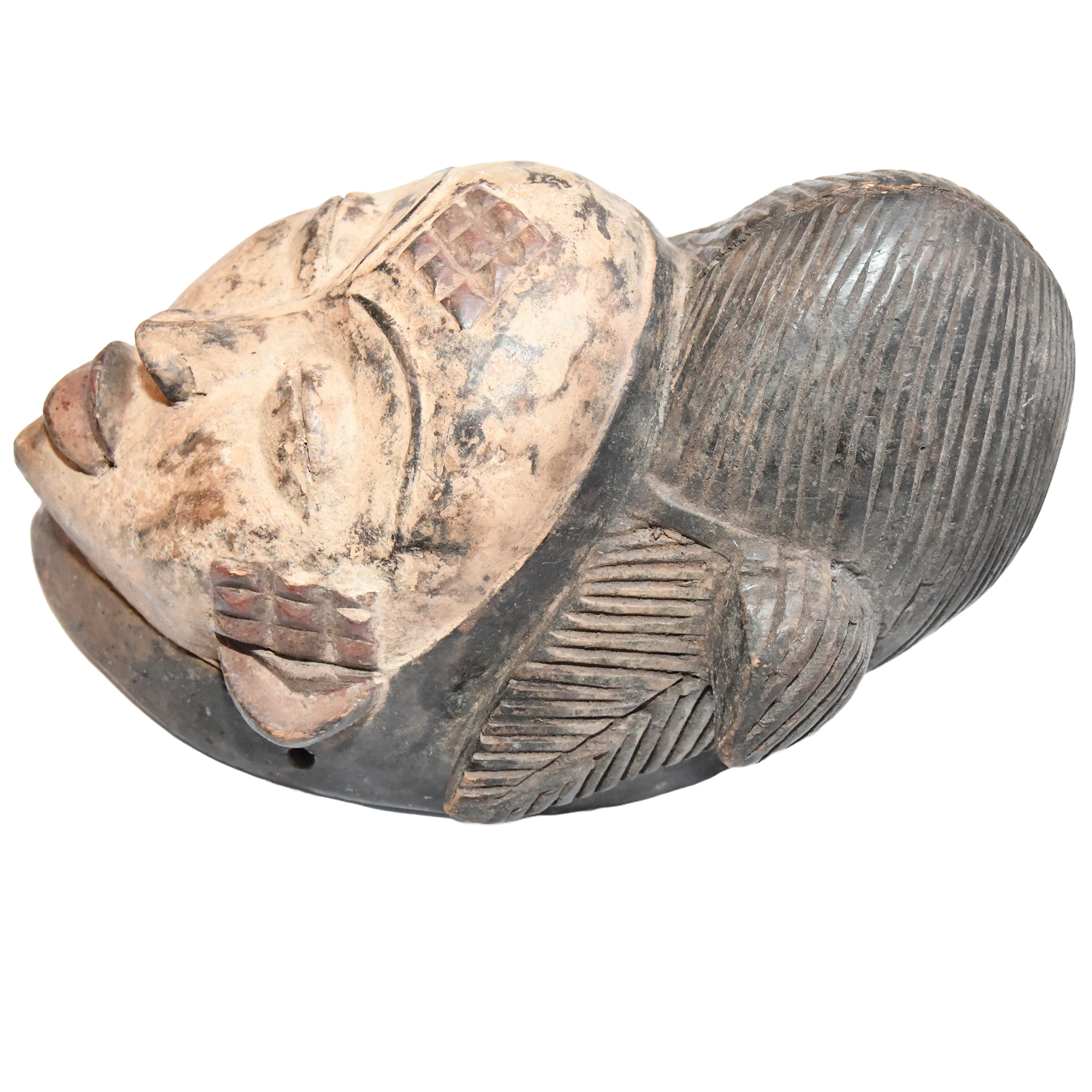
The Ife Queen Bronze Head is a sculptural artifact originating from the ancient Yoruba city of Ife, located in modern-day Nigeria. Dating to the 20th century or potentially earlier periods, this hand-cast bronze piece serves as a primary example of the metallurgical proficiency and artistic standards of the Yoruba people.
The sculpture depicts a regal female figure, identified as a queen. The design utilises a naturalistic style, prioritizing anatomical accuracy over abstraction.A defining feature of the work is the presence of delicately incised vertical lines across the face. These markings represent scarification, a traditional cultural practice associated with social hierarchy, status, and aesthetic standards within Yoruba society. The facial expression is rendered as serene and composed.
The broader discovery of Ife bronzes in 1938 provided significant physical evidence regarding African art history.These artifacts demonstrated that African societies possessed complex artistic systems and technical casting capabilities independent of European influence. This bronze head provides specific insights into the socio-political context of ancient Ife and remains a critical component of Yoruba cultural heritage.
Date: early to mid 20th century
Geography: Nigeria, West Africa
Dimensions: 36cm H 12cm W x 16cm D
Weight: 2.888kg
Material: bronze
Condition: is good see photos
The Ife Queen Bronze Head is a sculptural artifact originating from the ancient Yoruba city of Ife, located in modern-day Nigeria. Dating to the 20th century or potentially earlier periods, this hand-cast bronze piece serves as a primary example of the metallurgical proficiency and artistic standards of the Yoruba people.
The sculpture depicts a regal female figure, identified as a queen. The design utilises a naturalistic style, prioritizing anatomical accuracy over abstraction.A defining feature of the work is the presence of delicately incised vertical lines across the face. These markings represent scarification, a traditional cultural practice associated with social hierarchy, status, and aesthetic standards within Yoruba society. The facial expression is rendered as serene and composed.
The broader discovery of Ife bronzes in 1938 provided significant physical evidence regarding African art history.These artifacts demonstrated that African societies possessed complex artistic systems and technical casting capabilities independent of European influence. This bronze head provides specific insights into the socio-political context of ancient Ife and remains a critical component of Yoruba cultural heritage.


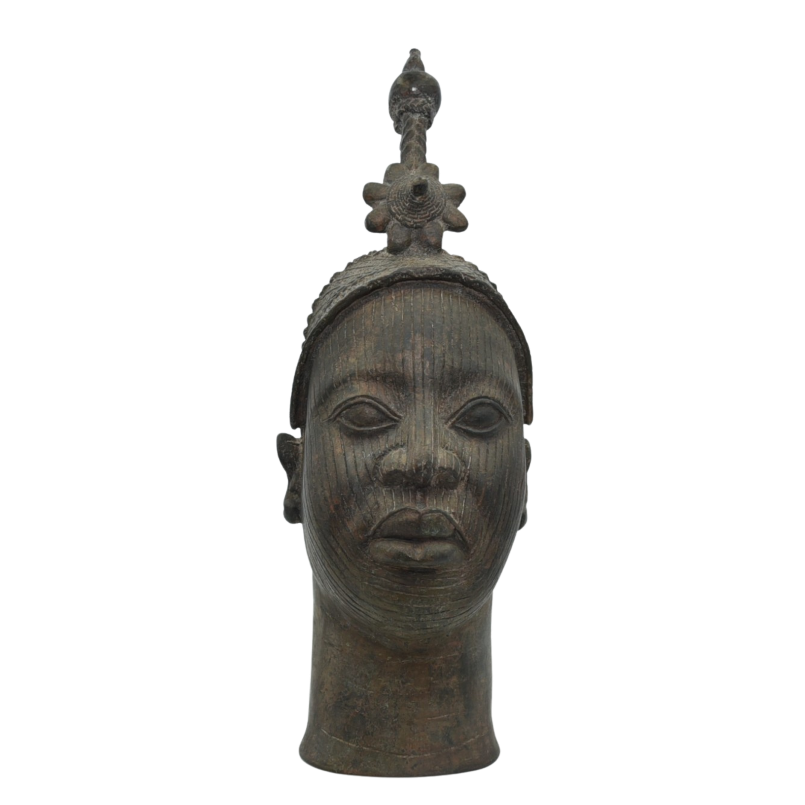 Image 1 of 10
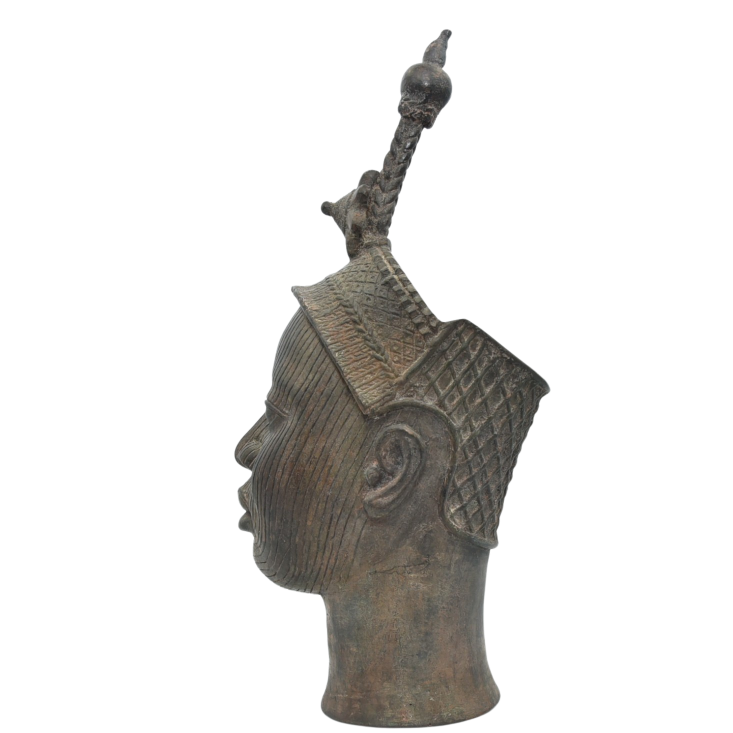 Image 2 of 10
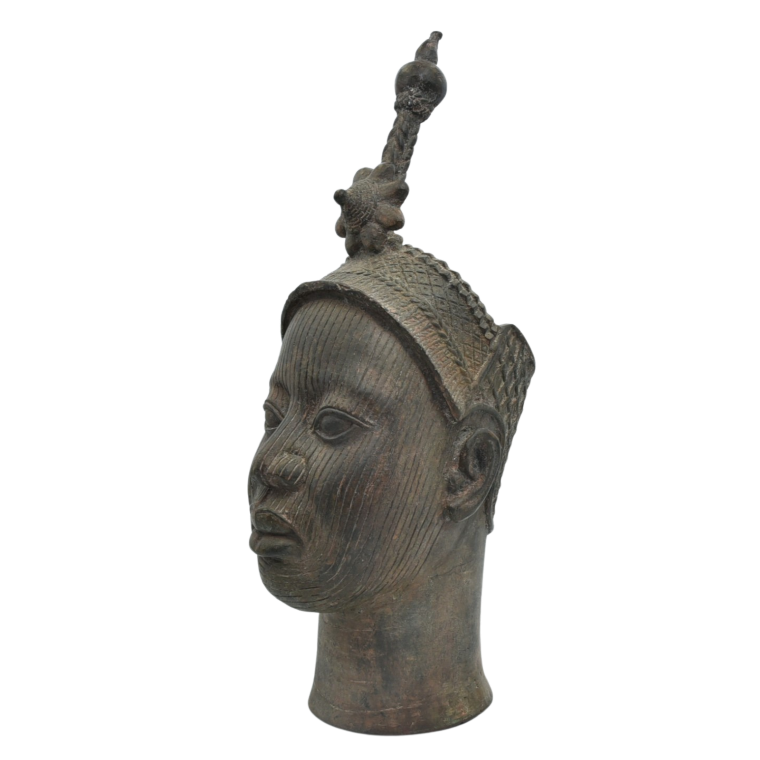 Image 3 of 10
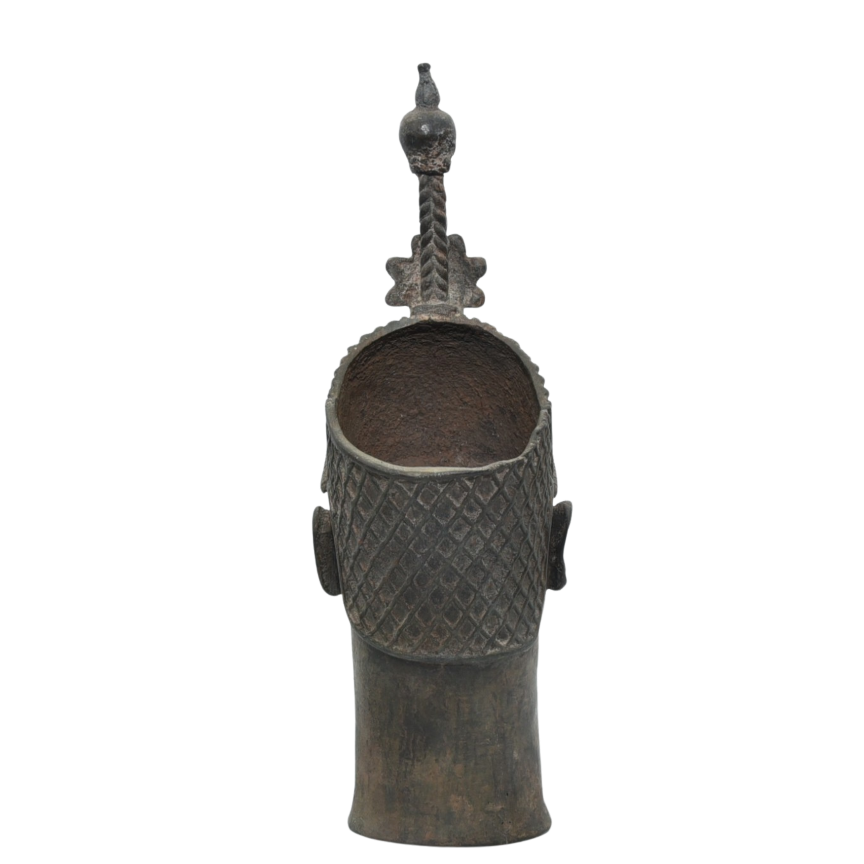 Image 4 of 10
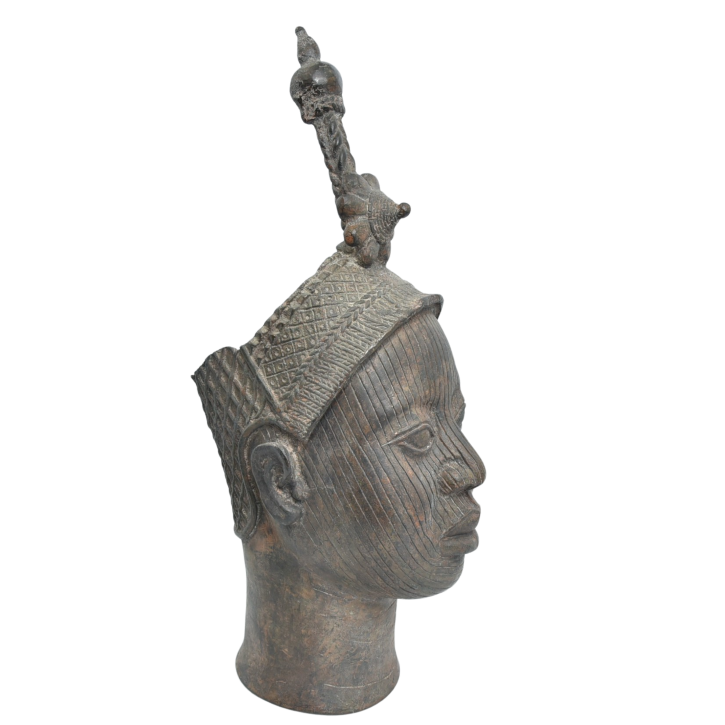 Image 5 of 10
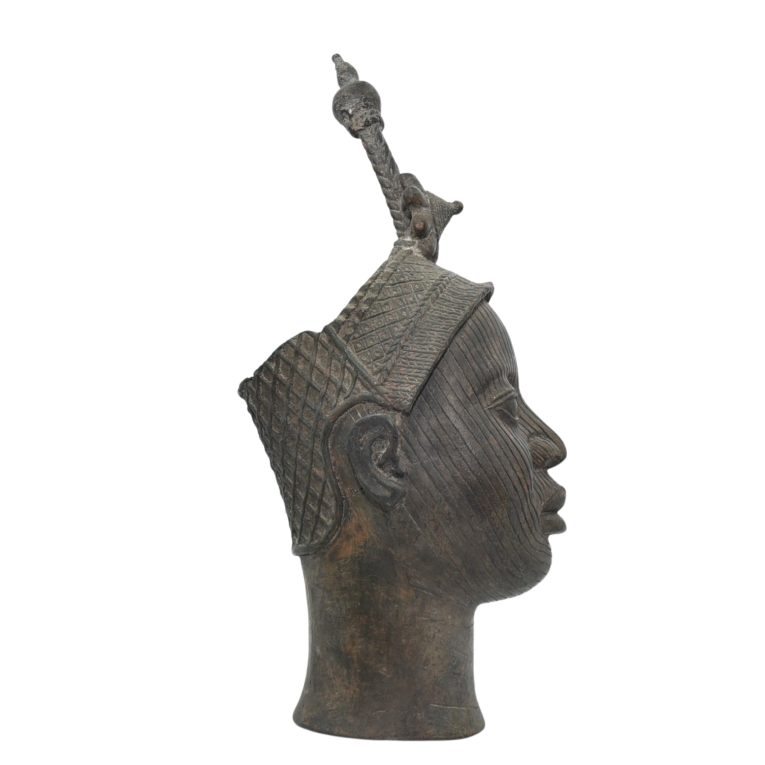 Image 6 of 10
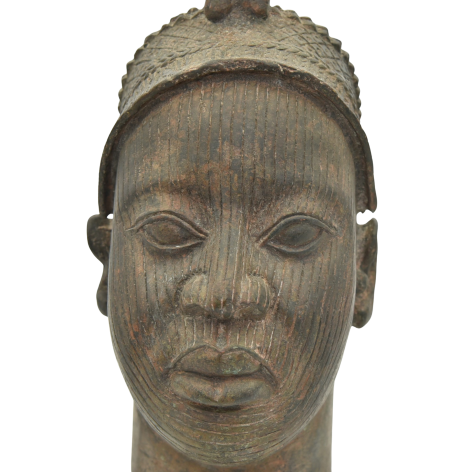 Image 7 of 10
 Image 8 of 10
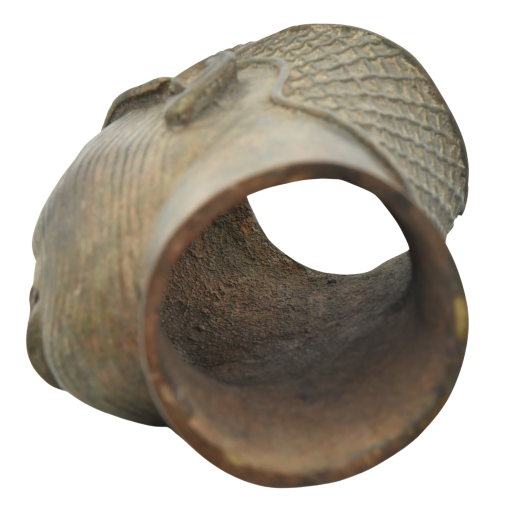 Image 9 of 10
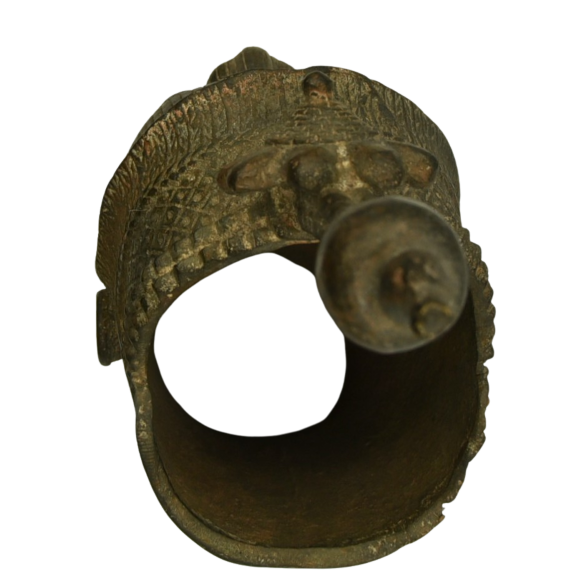 Image 10 of 10