Date: 19th century
Geography: India
Dimensions: 30cm H 14cm W x 11.5cm D
Weight: 2.819 kg
Material: bronze
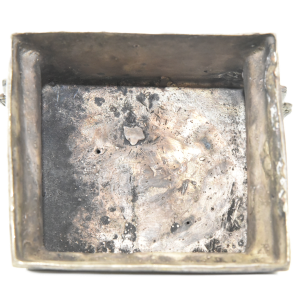
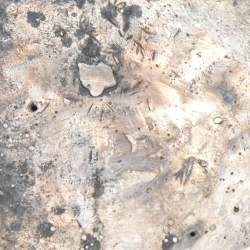
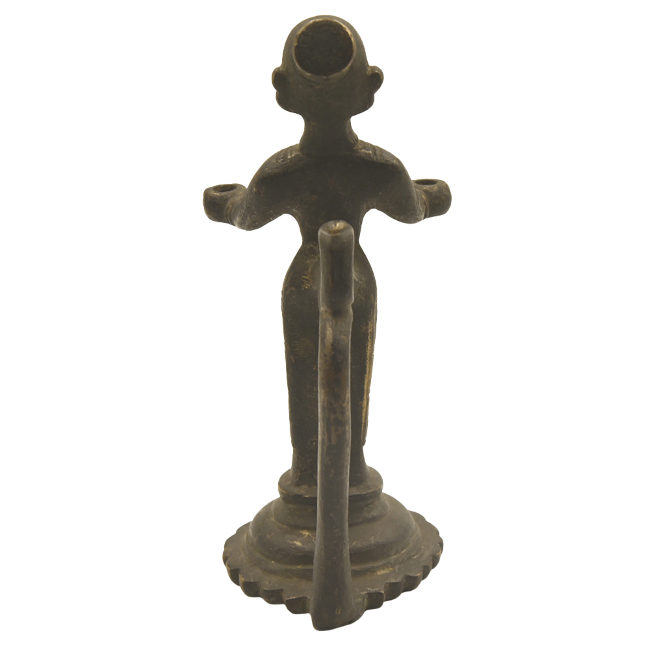
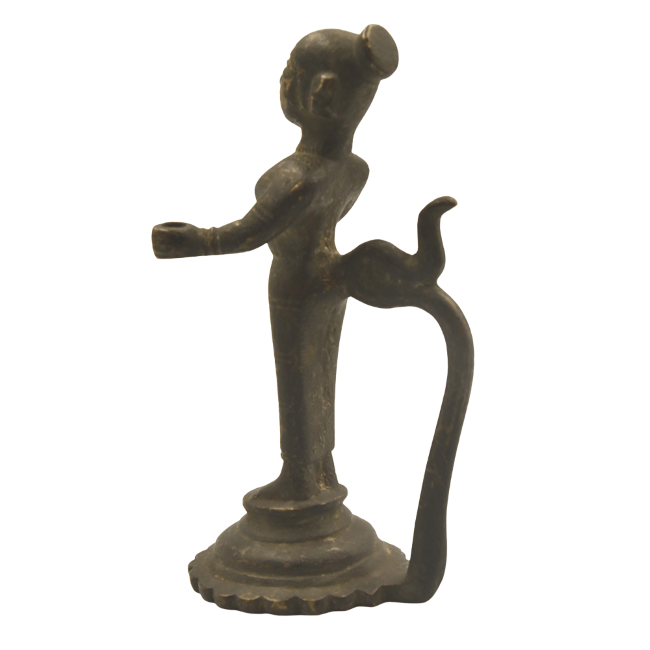
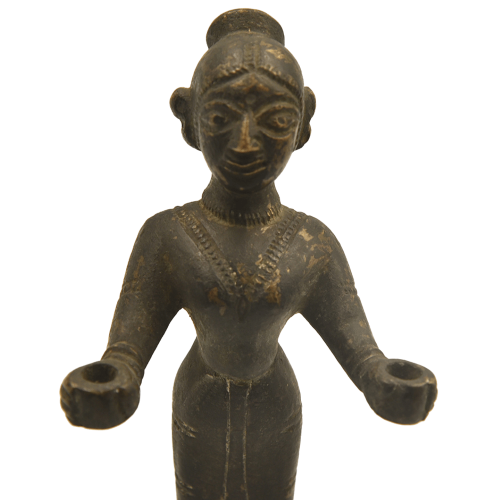
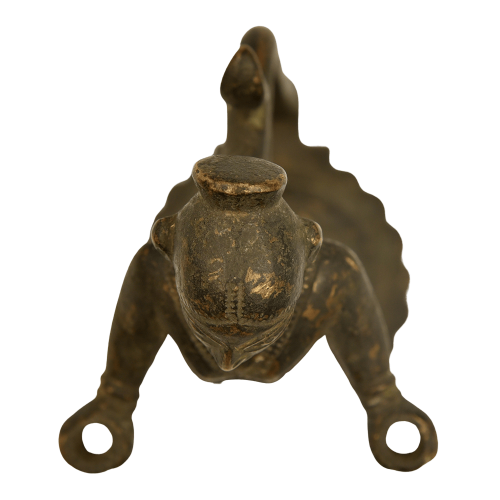
Condition: Very good for its age see photos
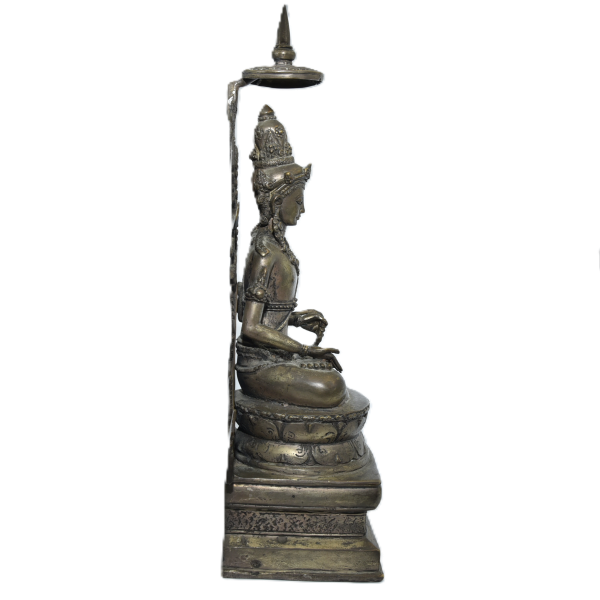
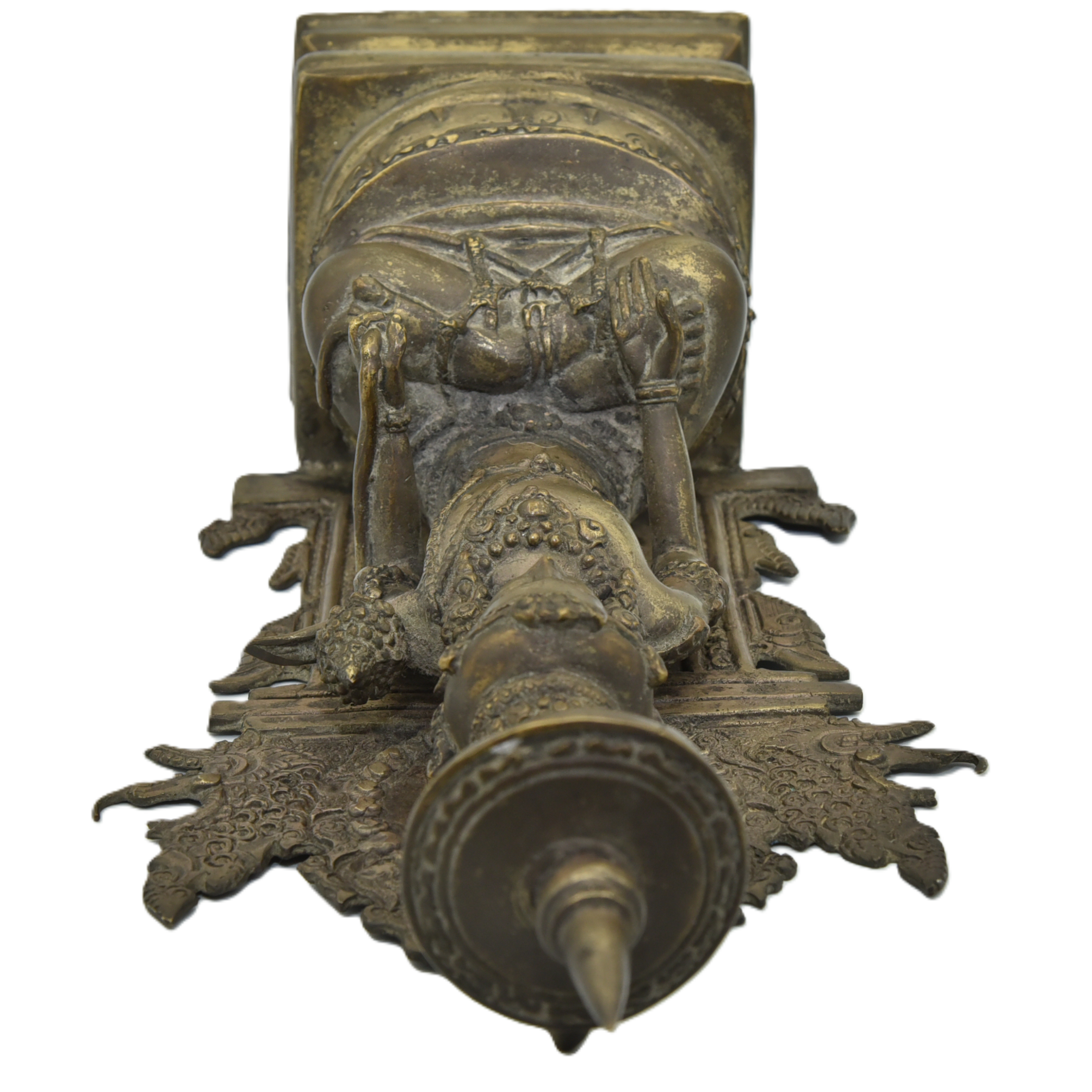
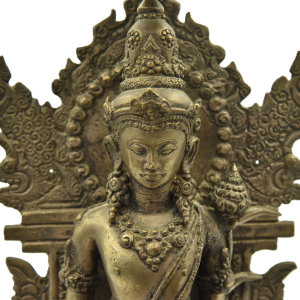
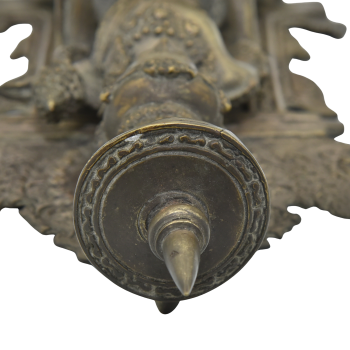
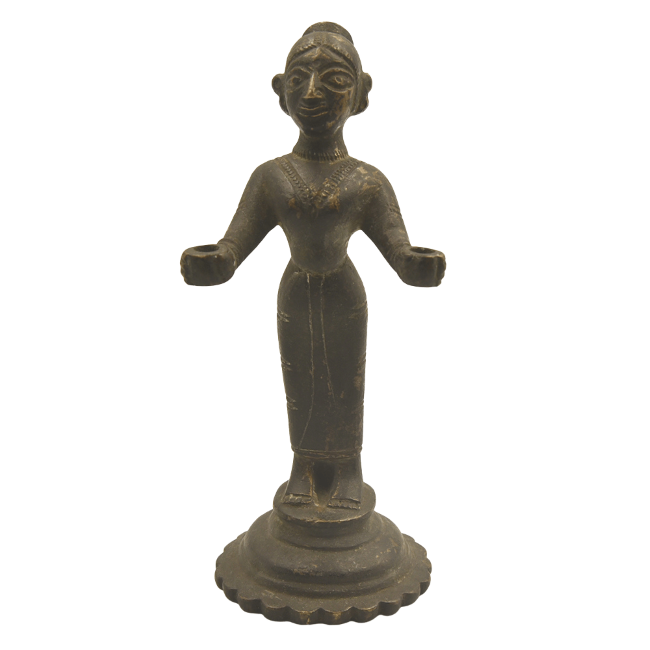
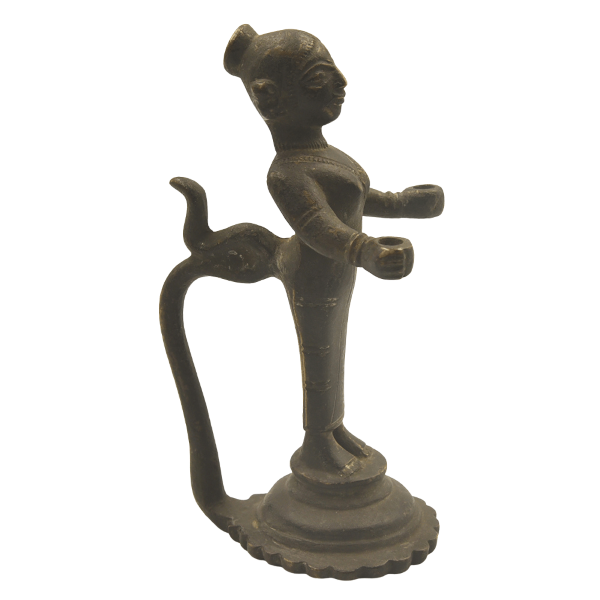
Chola style hand cast bronze of the hindu God Shiva and Goddess Parvati statue
This 19th century bronze sculpture is a traditional Chola style representation of Shiva and Parvati, handcast using the lost wax technique, it's a good example of South Indian craftsmanship. It depicts the divine couple as Purusha (pure consciousness) and Shakti (divine energy) in a standing pose.
Iconography and Symbolism
Lord Shiva: Features four arms.
Lower Right Hand: Positioned in Abhaya Mudra (gesture of fearlessness). The palm is marked with a diamond, cross, and four dots, symbolising cosmic balance and spiritual protection.
Upper Right Hand: Holds a Parashu (battle axe), one of the powers it represents is cutting through worldly attachments and freeing the soul from sorrow.
Upper Left Hand: Holding aMriga (deer), one of the meanings is his role as the protector of all living beings.
Lower Left Arm: Embraces Parvati, with the hand resting on her breast, signifying their union.
Headdress: Adorned with the Chandrashekhara (crescent moon), representing the cycles of creation and destruction.
Goddess Parvati: Depicted with a smiling expression.
Left Hand: Holds a conch signifying her role as Shakti, the energy that vibrates through all living things.
Right Hand: rests on Lord Shiva's thigh signifying inseparability from Shiva, also represents shringara (divine love and beauty).
Shared Attributes: Both figures feature a crescent moon on their foreheads, symbolising the harmony of masculine and feminine energies. The belt buckles are decorated with the Kirtimukha ("Face of Glory"), representing the dissolution of ego and protection against negative energy.
Base: The figures stand upon a Padma (the sacred lotus), the traditional symbol for purity, spiritual enlightenment, and fertility.
Provenance
This piece was formerly part of the McAllister Collection, curated by Professor J. Gilbert and Cora McAllister. Professor McAllister served as Emeritus Professor in Anthropology at the University of Texas, and the couple was noted for their extensive and scholarly assembly of Asian art.
Date: 19th century
Geography: India
Dimensions: 30cm H 14cm W x 11.5cm D
Weight: 2.819 kg
Material: bronze
Condition: Very good for its age see photos
Chola style hand cast bronze of the hindu God Shiva and Goddess Parvati statue
This 19th century bronze sculpture is a traditional Chola style representation of Shiva and Parvati, handcast using the lost wax technique, it's a good example of South Indian craftsmanship. It depicts the divine couple as Purusha (pure consciousness) and Shakti (divine energy) in a standing pose.
Iconography and Symbolism
Lord Shiva: Features four arms.
Lower Right Hand: Positioned in Abhaya Mudra (gesture of fearlessness). The palm is marked with a diamond, cross, and four dots, symbolising cosmic balance and spiritual protection.
Upper Right Hand: Holds a Parashu (battle axe), one of the powers it represents is cutting through worldly attachments and freeing the soul from sorrow.
Upper Left Hand: Holding aMriga (deer), one of the meanings is his role as the protector of all living beings.
Lower Left Arm: Embraces Parvati, with the hand resting on her breast, signifying their union.
Headdress: Adorned with the Chandrashekhara (crescent moon), representing the cycles of creation and destruction.
Goddess Parvati: Depicted with a smiling expression.
Left Hand: Holds a conch signifying her role as Shakti, the energy that vibrates through all living things.
Right Hand: rests on Lord Shiva's thigh signifying inseparability from Shiva, also represents shringara (divine love and beauty).
Shared Attributes: Both figures feature a crescent moon on their foreheads, symbolising the harmony of masculine and feminine energies. The belt buckles are decorated with the Kirtimukha ("Face of Glory"), representing the dissolution of ego and protection against negative energy.
Base: The figures stand upon a Padma (the sacred lotus), the traditional symbol for purity, spiritual enlightenment, and fertility.
Provenance
This piece was formerly part of the McAllister Collection, curated by Professor J. Gilbert and Cora McAllister. Professor McAllister served as Emeritus Professor in Anthropology at the University of Texas, and the couple was noted for their extensive and scholarly assembly of Asian art.


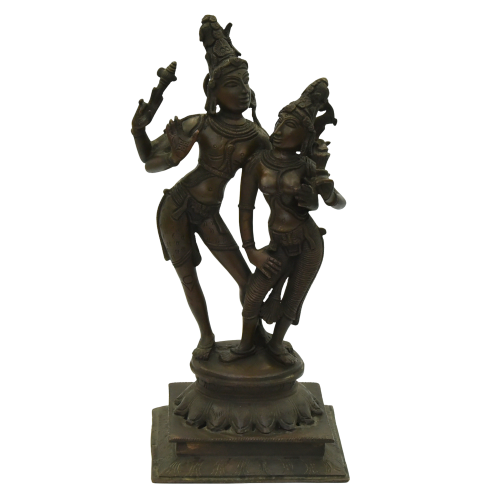 Image 1 of 10
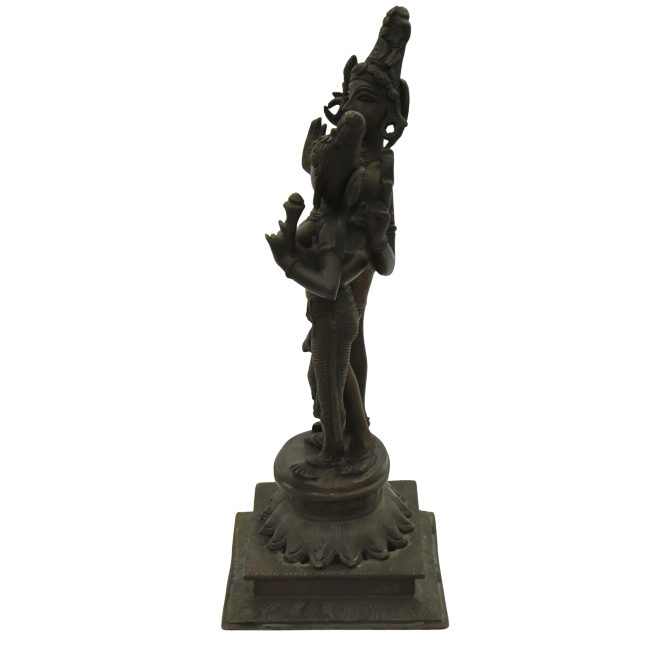 Image 2 of 10
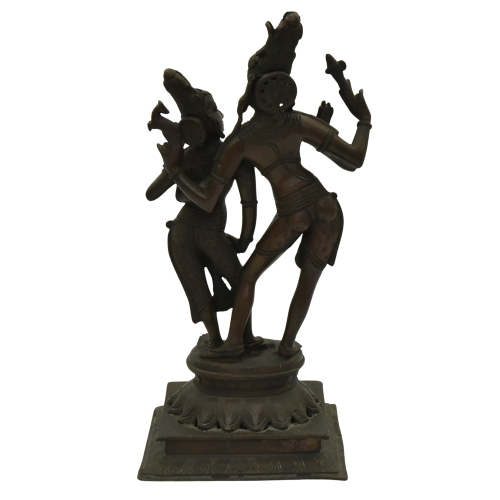 Image 3 of 10
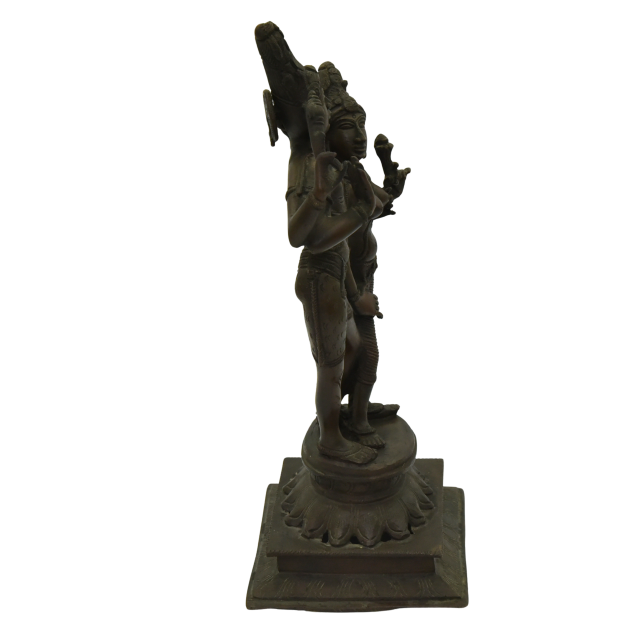 Image 4 of 10
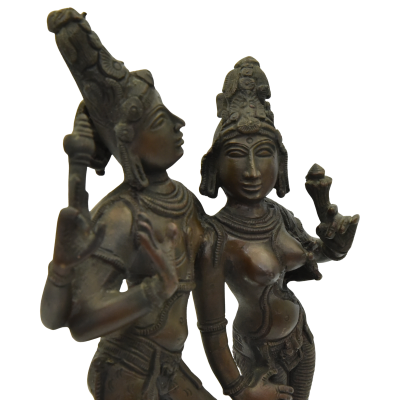 Image 5 of 10
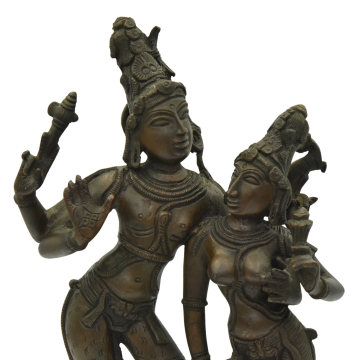 Image 6 of 10
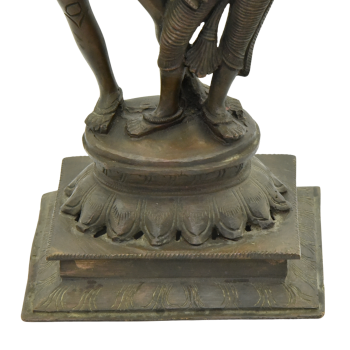 Image 7 of 10
 Image 8 of 10
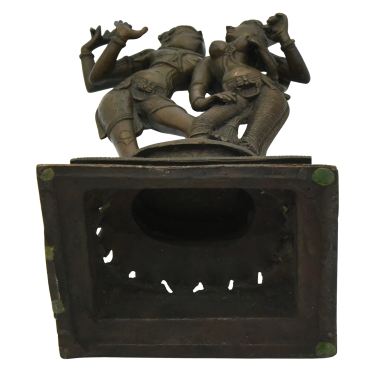 Image 9 of 10
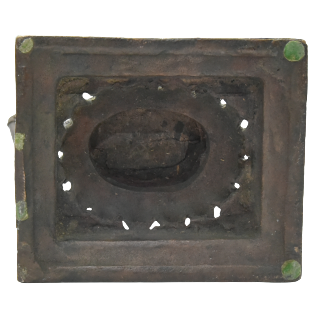 Image 10 of 10