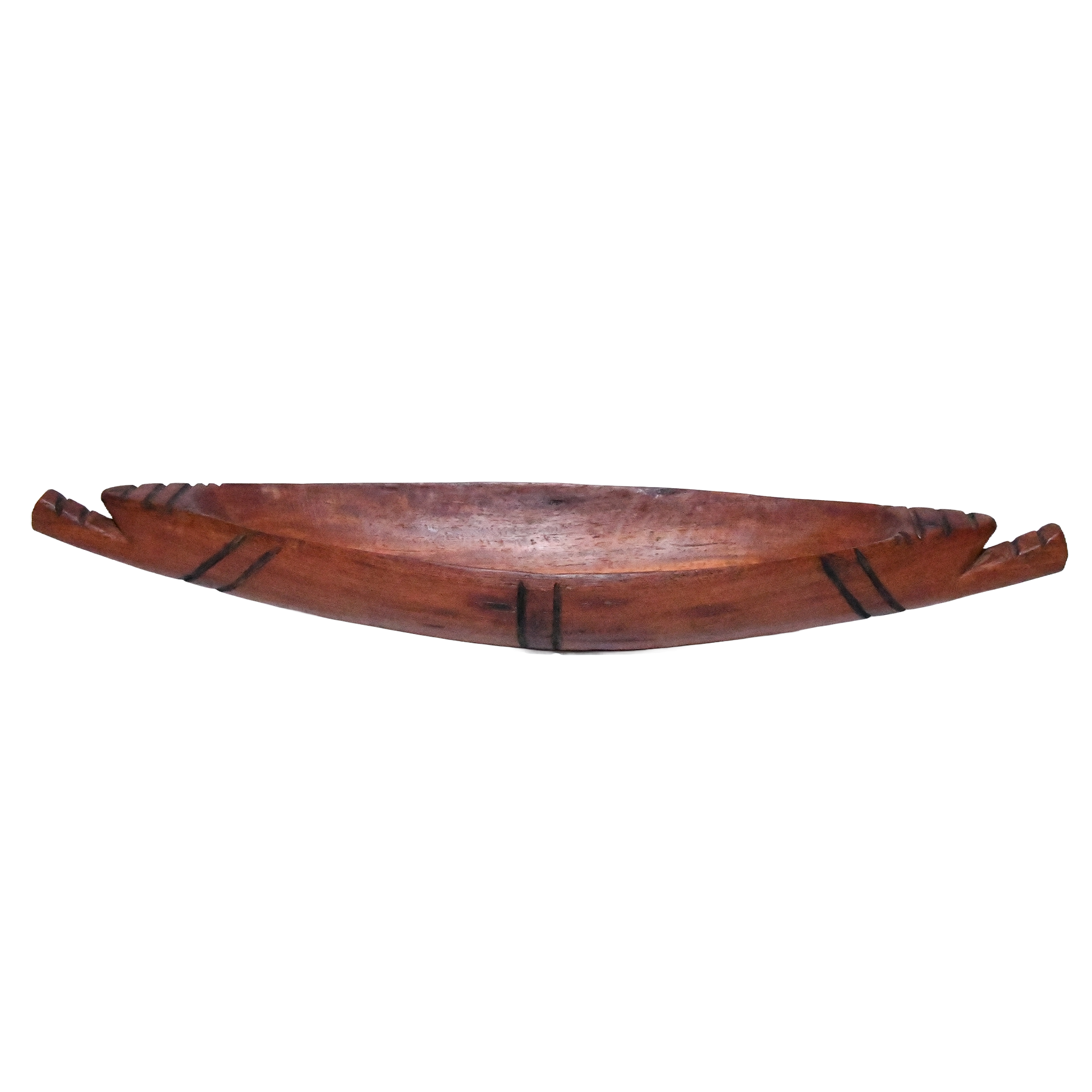
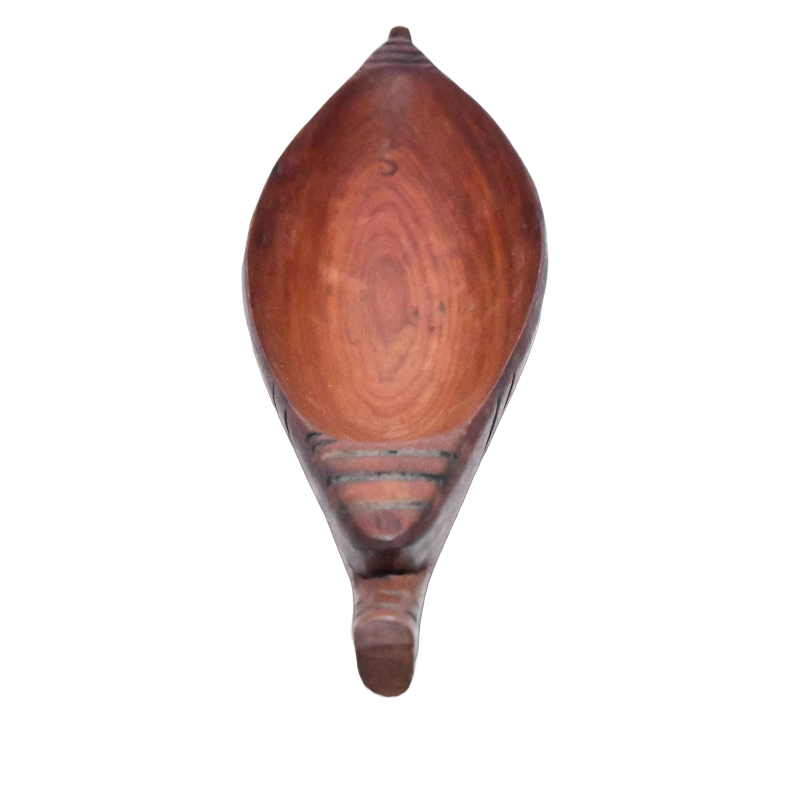
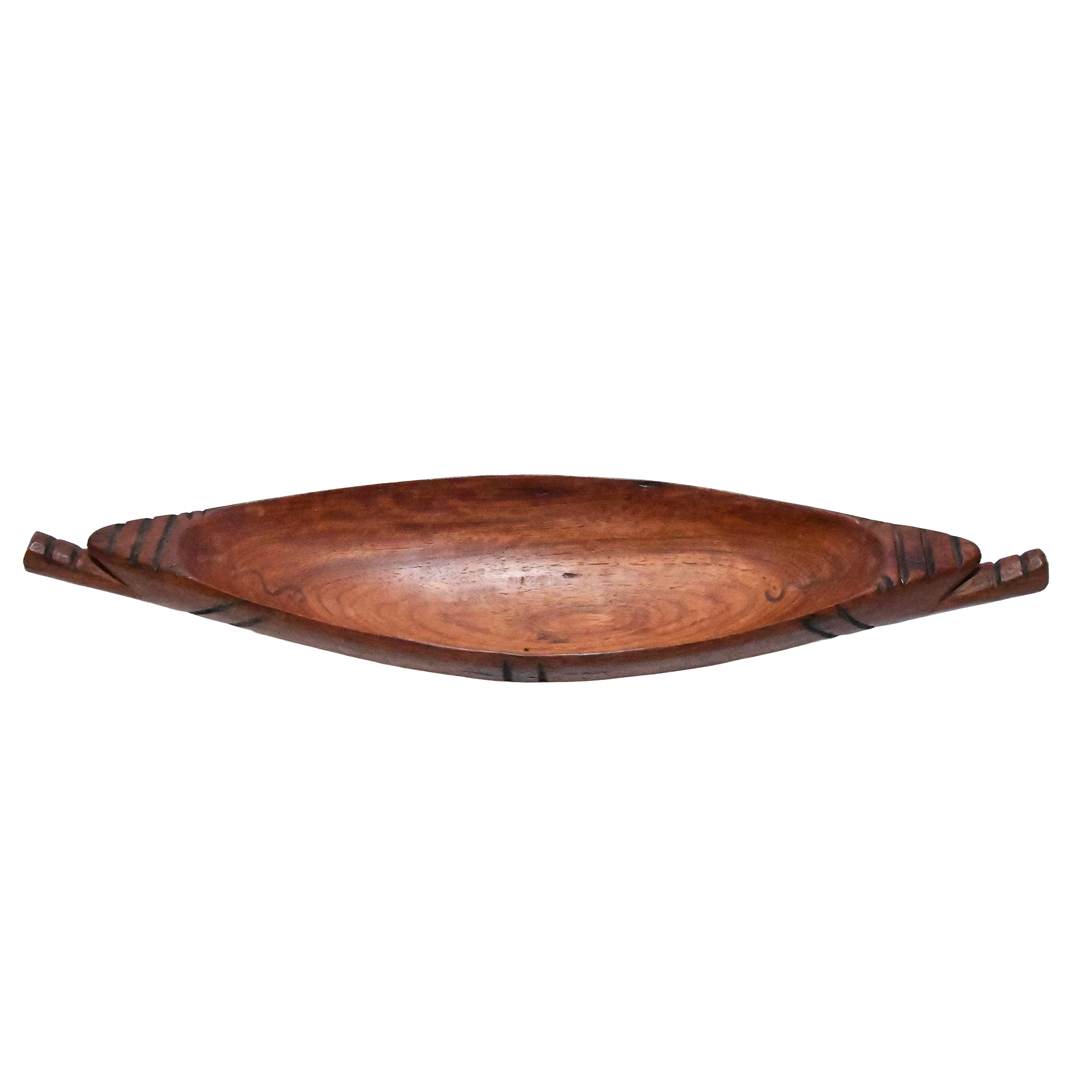
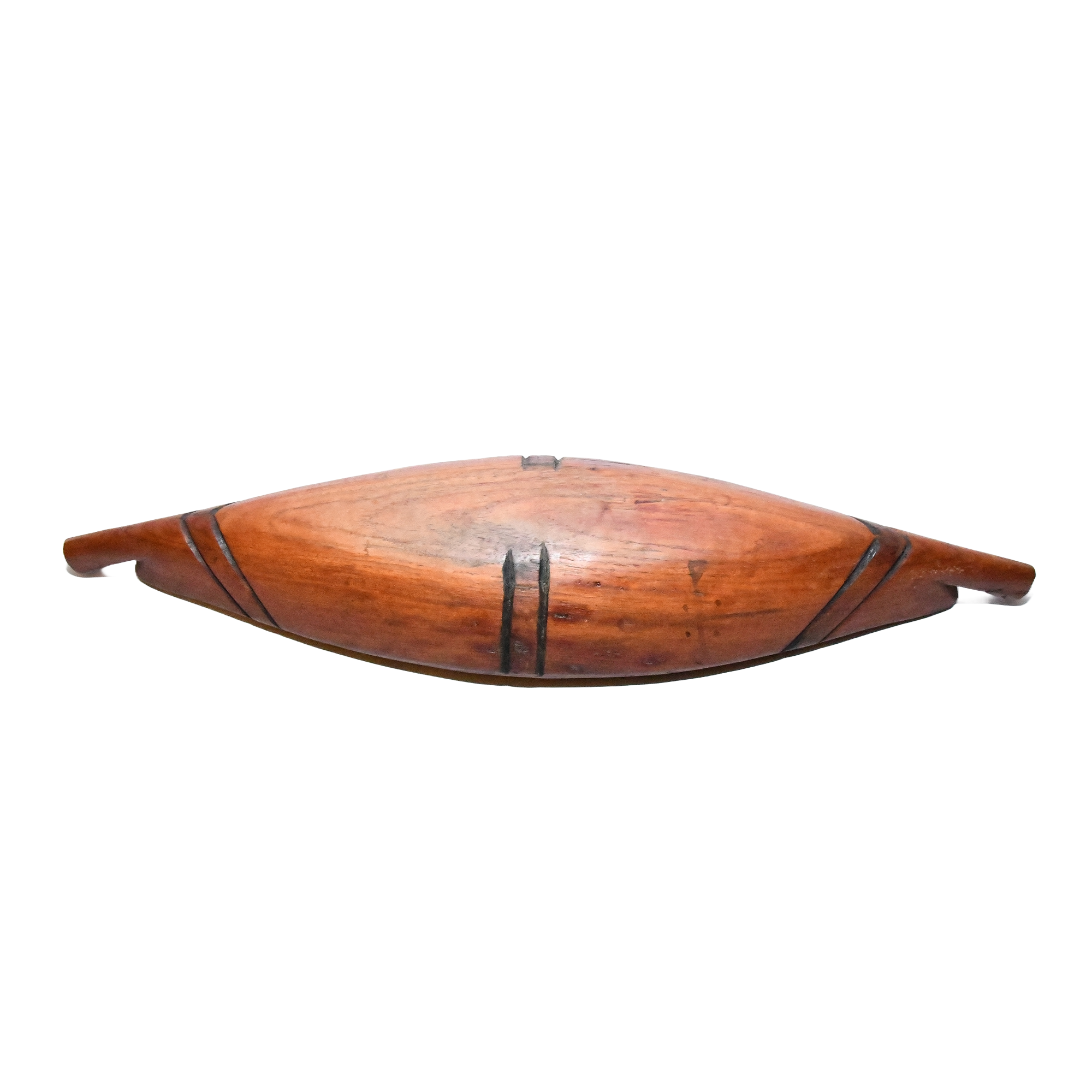
Date: Circa mid-20th century
Geography: Mandalay, Myanmar (Burma)
Dimensions: 26cm H x 16cm W x 7cm D
Weight: 891g
Material: Wood, believed to be teak
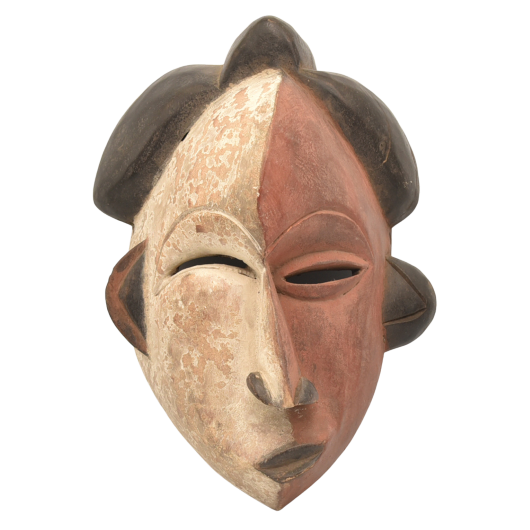
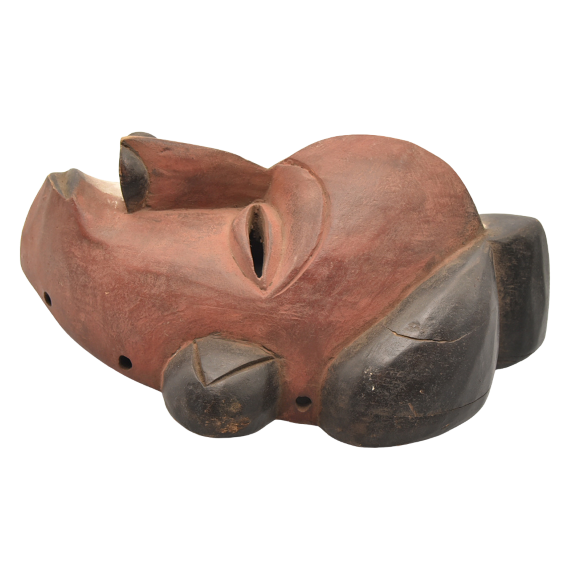
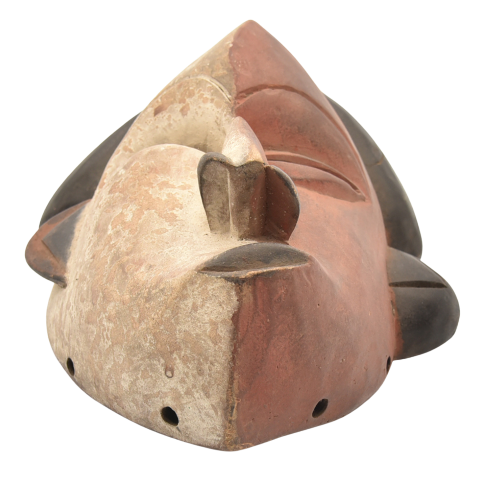
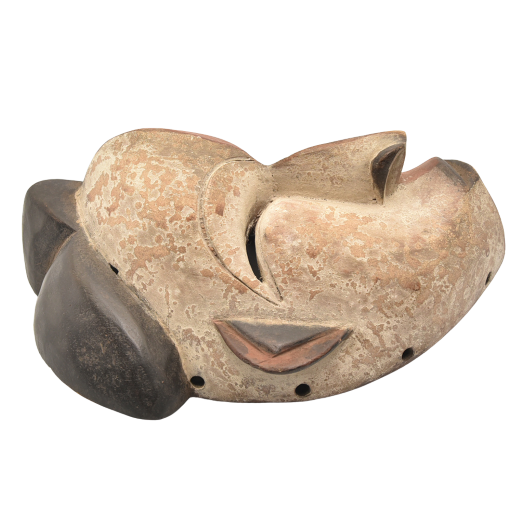
Condition: Very good for its age, see photos
This hand-carved Burmese Buddhist monk dates from around the mid-20th century and is thought to come from Mandalay, the former royal capital of northern Myanmar, long known for its skilled woodcarvers and Buddhist artistic traditions. It is believed to be carved from teak, although the exact timber cannot be confirmed.
The monk sits in the half lotus position (Ardha Padmasana), a stable posture widely used in Buddhist meditation. His eyes are closed and his expression calm and serene, suggesting deep contemplation, while his robes are carved in simple, flowing folds that drape naturally across the body.
His hands are held in the Vitarka Mudra, the gesture of teaching and discussion, associated with enlightened teachers and the sharing of Buddhist wisdom.
Unusually, the monk has long, slender fingers and similarly elongated feet, giving the figure an elegant, distinctive look that sets it apart from many traditional Burmese carvings. These proportions may reflect the individual style of the carver or a regional interpretation.
With its warm-toned wood and gentle signs of age, this is a characterful piece reflecting Myanmar’s long Buddhist heritage and woodcarving traditions, and a lovely addition to a collection of Asian art or a calm, contemplative space.
As with all our vintage pieces, this figure is one of a kind, and natural variations in grain, colour and minor surface wear should be expected as part of its character. Dimensions and weight are approximate.
Date: Circa mid-20th century
Geography: Mandalay, Myanmar (Burma)
Dimensions: 26cm H x 16cm W x 7cm D
Weight: 891g
Material: Wood, believed to be teak
Condition: Very good for its age, see photos
This hand-carved Burmese Buddhist monk dates from around the mid-20th century and is thought to come from Mandalay, the former royal capital of northern Myanmar, long known for its skilled woodcarvers and Buddhist artistic traditions. It is believed to be carved from teak, although the exact timber cannot be confirmed.
The monk sits in the half lotus position (Ardha Padmasana), a stable posture widely used in Buddhist meditation. His eyes are closed and his expression calm and serene, suggesting deep contemplation, while his robes are carved in simple, flowing folds that drape naturally across the body.
His hands are held in the Vitarka Mudra, the gesture of teaching and discussion, associated with enlightened teachers and the sharing of Buddhist wisdom.
Unusually, the monk has long, slender fingers and similarly elongated feet, giving the figure an elegant, distinctive look that sets it apart from many traditional Burmese carvings. These proportions may reflect the individual style of the carver or a regional interpretation.
With its warm-toned wood and gentle signs of age, this is a characterful piece reflecting Myanmar’s long Buddhist heritage and woodcarving traditions, and a lovely addition to a collection of Asian art or a calm, contemplative space.
As with all our vintage pieces, this figure is one of a kind, and natural variations in grain, colour and minor surface wear should be expected as part of its character. Dimensions and weight are approximate.


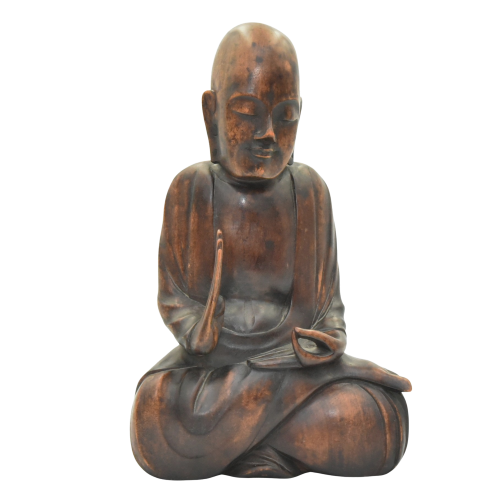 Image 1 of 7
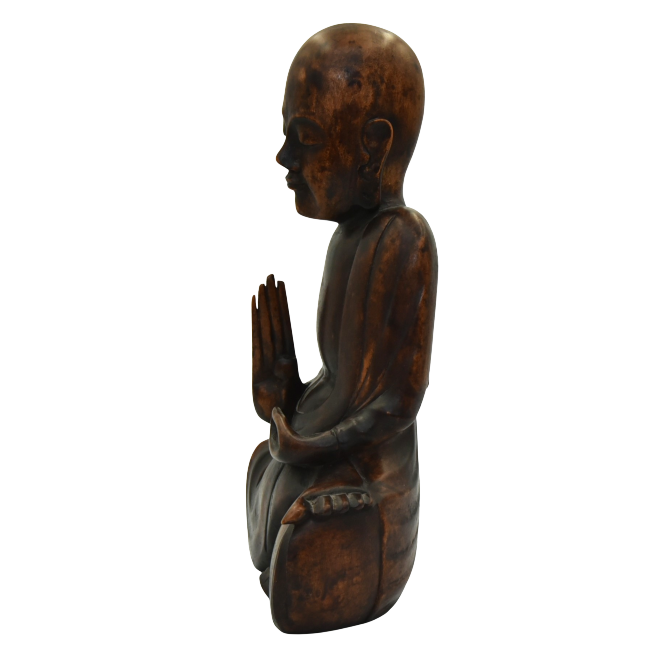 Image 2 of 7
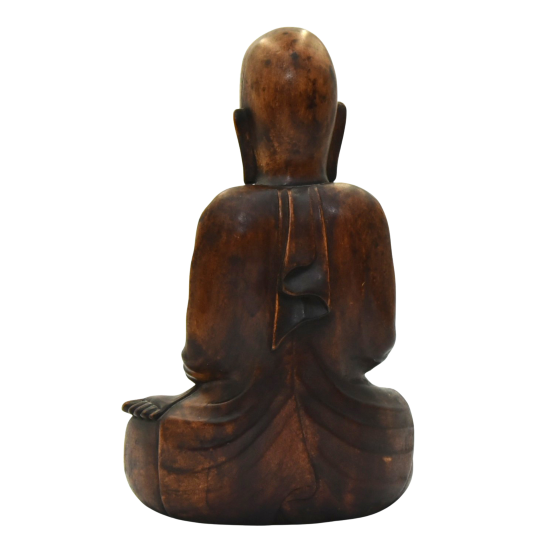 Image 3 of 7
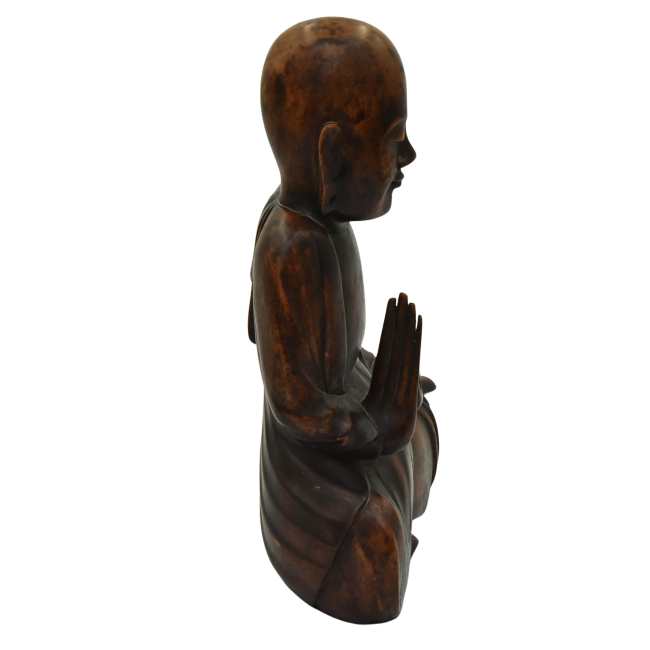 Image 4 of 7
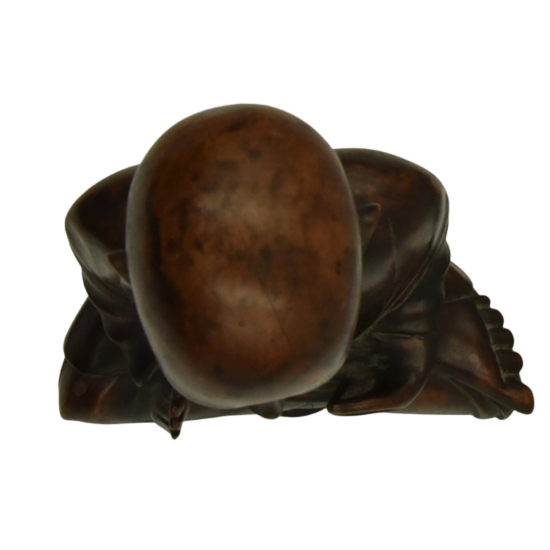 Image 5 of 7
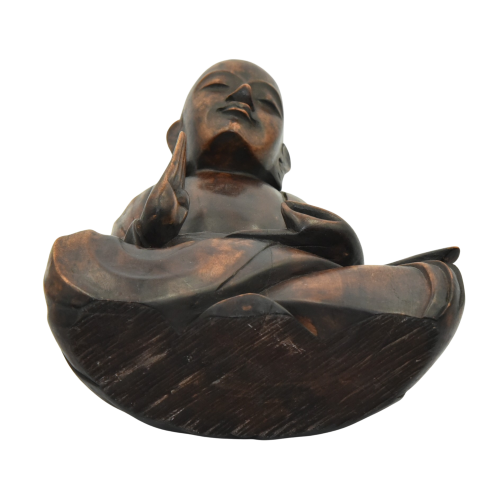 Image 6 of 7