Date: early to mid 20th century
Geography: Burma (Myanmar)
Culture: Burmese
Dimensions: full length with cord 56cm L, puppet 35cm H x 20cm W x 6cm D
Weight: 320g
Material: Wood
Condition: Used, with wear and discoloration on the fabric. The paint on the face also shows wear (see photos).
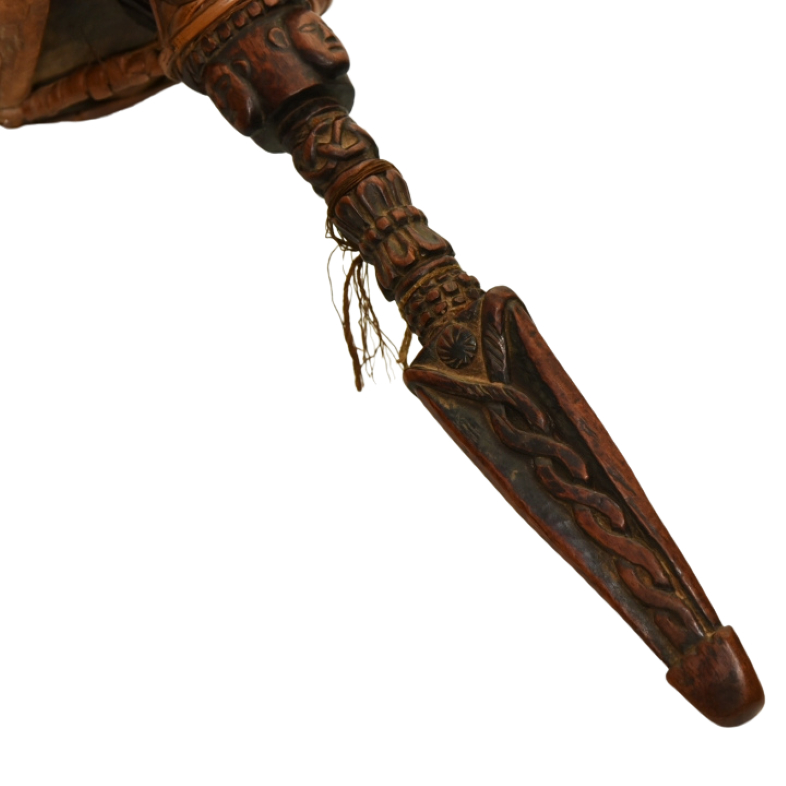
A Zawgyi (Zaw-jee) holds a distinctive place in Burmese belief as a semi-immortal figure of alchemy and mysticism, celebrated in folk tradition for powers gained through years of esoteric practice rather than ordinary means. He is frequently represented in traditional craftsmanship as a hand-carved wooden marionette. The figure is hand-painted, with a horse-hair beard. His clothes are in red, purple and black, with a hat, and are hand-stitched from cotton and velvet, decorated with metal sequins and a flower made from red glass with gold-coloured balls at its centre. The stick he holds is said to hold magical powers, reflecting the supernatural abilities attributed to him in Burmese folklore.
Beyond the character he represents, the marionette itself is traditionally believed to carry supernatural power. In Burmese folk belief, the Zawgyi puppet is not simply a depiction of the alchemist but a vessel infused with his mystical qualities a link between the carved wooden figure and the otherworldly forces of Burmese magic and alchemy that the Zawgyi is said to command. This belief in the object's own potency is part of what makes such marionettes significant beyond their role in performance, treated with a degree of reverence and caution in traditional Burmese culture.
The Zawgyi occupies a distinctive place in Burmese belief, standing apart from both pure animism and mainstream Theravada Buddhism while drawing on elements of each. Burma is a predominantly Theravada Buddhist country, and Buddhist cosmology, merit-making, and the pursuit of spiritual power all shape the cultural world the Zawgyi inhabitants. Yet the Zawgyi himself belongs to an older, esoteric strand of Burmese belief, a form of folk mysticism (weikza) that sits alongside orthodox Theravada practice rather than within it. His pursuit of immortality and supernatural power through alchemy, spells, and potions reflects pre-Buddhist animist and shamanic traditions, blended with the local esoteric Buddhism found across Burma, where practitioners known as weikza do seek to extend life and gain magical abilities while still working toward eventual enlightenment. Tradition places him in solitary retreat within Himavanta, a hidden forest of Burmese legend, where he is said to forage herbs and minerals for his alchemical work, far from human settlements.
The figure is worked by 9 strings held by a wooden controller each operating a different part of his body, a hallmark of traditional Burmese marionette theatre (yoke thé), which historically performed both courtly entertainment and stories carrying Buddhist and folk moral themes. This piece is a good example of that craftsmanship, capturing a figure who sits at the crossroads of Burmese animism, folk mysticism, and Theravada Buddhist culture.
Read more
Date: early to mid 20th century
Geography: Burma (Myanmar)
Culture: Burmese
Dimensions: full length with cord 56cm L, puppet 35cm H x 20cm W x 6cm D
Weight: 320g
Material: Wood
Condition: Used, with wear and discoloration on the fabric. The paint on the face also shows wear (see photos).
A Zawgyi (Zaw-jee) holds a distinctive place in Burmese belief as a semi-immortal figure of alchemy and mysticism, celebrated in folk tradition for powers gained through years of esoteric practice rather than ordinary means. He is frequently represented in traditional craftsmanship as a hand-carved wooden marionette. The figure is hand-painted, with a horse-hair beard. His clothes are in red, purple and black, with a hat, and are hand-stitched from cotton and velvet, decorated with metal sequins and a flower made from red glass with gold-coloured balls at its centre. The stick he holds is said to hold magical powers, reflecting the supernatural abilities attributed to him in Burmese folklore.
Beyond the character he represents, the marionette itself is traditionally believed to carry supernatural power. In Burmese folk belief, the Zawgyi puppet is not simply a depiction of the alchemist but a vessel infused with his mystical qualities a link between the carved wooden figure and the otherworldly forces of Burmese magic and alchemy that the Zawgyi is said to command. This belief in the object's own potency is part of what makes such marionettes significant beyond their role in performance, treated with a degree of reverence and caution in traditional Burmese culture.
The Zawgyi occupies a distinctive place in Burmese belief, standing apart from both pure animism and mainstream Theravada Buddhism while drawing on elements of each. Burma is a predominantly Theravada Buddhist country, and Buddhist cosmology, merit-making, and the pursuit of spiritual power all shape the cultural world the Zawgyi inhabitants. Yet the Zawgyi himself belongs to an older, esoteric strand of Burmese belief, a form of folk mysticism (weikza) that sits alongside orthodox Theravada practice rather than within it. His pursuit of immortality and supernatural power through alchemy, spells, and potions reflects pre-Buddhist animist and shamanic traditions, blended with the local esoteric Buddhism found across Burma, where practitioners known as weikza do seek to extend life and gain magical abilities while still working toward eventual enlightenment. Tradition places him in solitary retreat within Himavanta, a hidden forest of Burmese legend, where he is said to forage herbs and minerals for his alchemical work, far from human settlements.
The figure is worked by 9 strings held by a wooden controller each operating a different part of his body, a hallmark of traditional Burmese marionette theatre (yoke thé), which historically performed both courtly entertainment and stories carrying Buddhist and folk moral themes. This piece is a good example of that craftsmanship, capturing a figure who sits at the crossroads of Burmese animism, folk mysticism, and Theravada Buddhist culture.
Read more


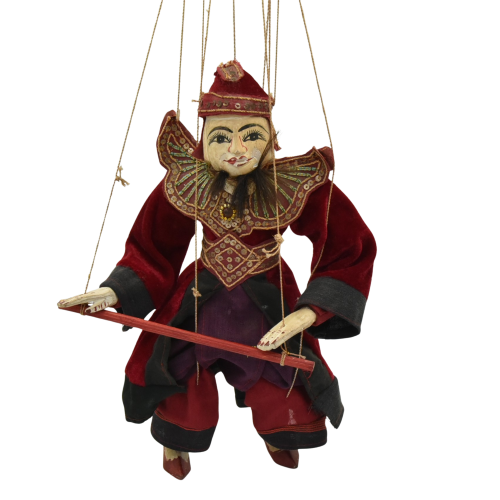 Image 1 of 10
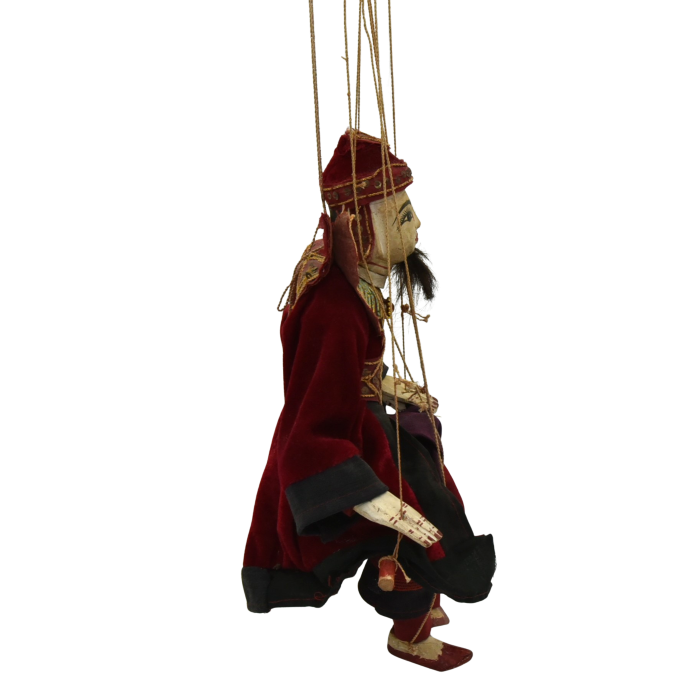 Image 2 of 10
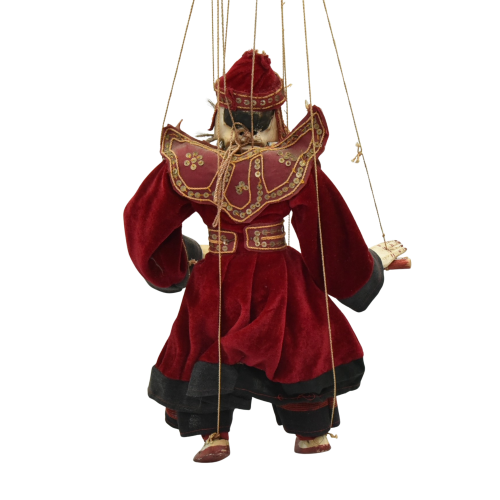 Image 4 of 10
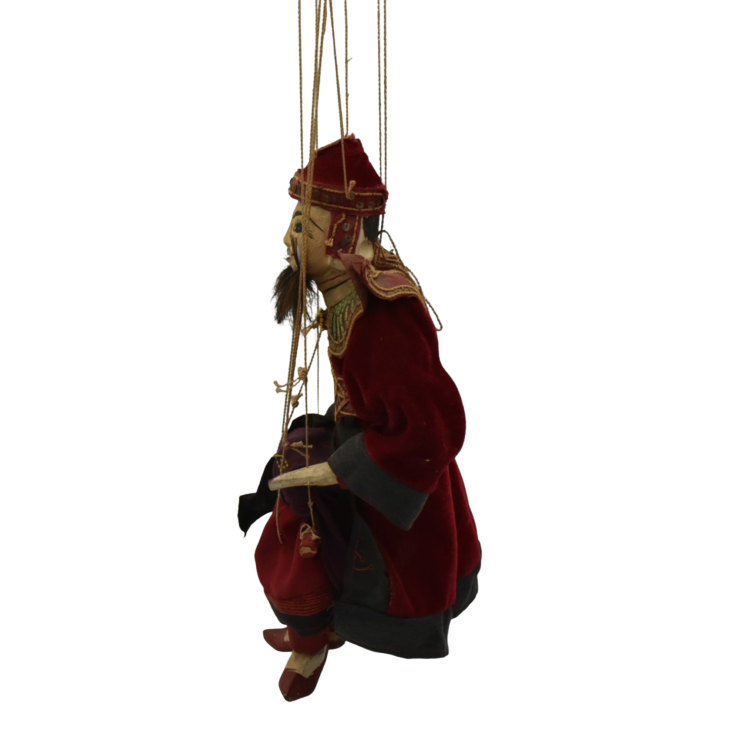 Image 5 of 10
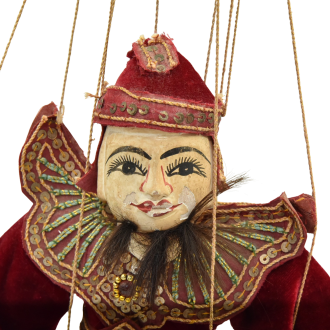 Image 6 of 10
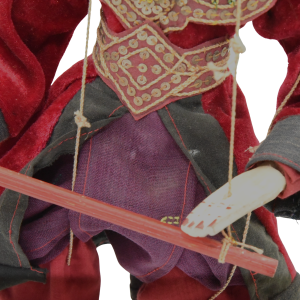 Image 7 of 10
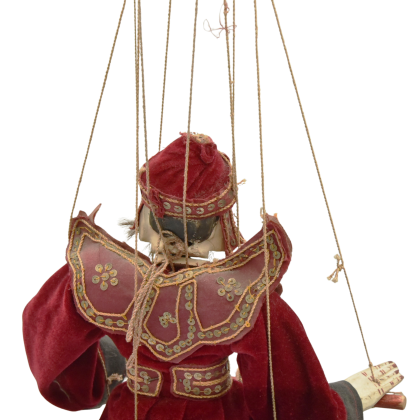 Image 8 of 10
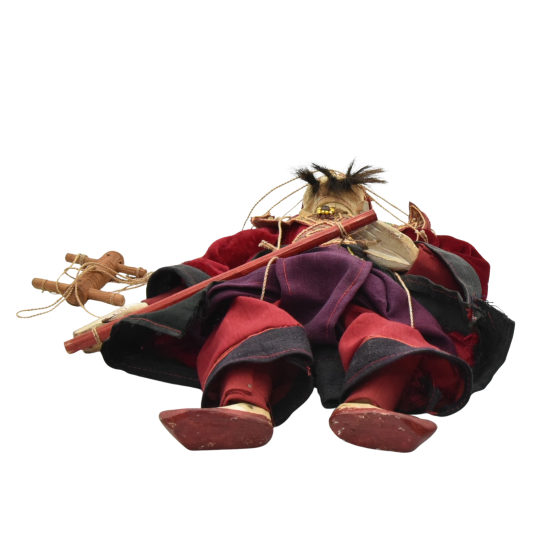 Image 9 of 10
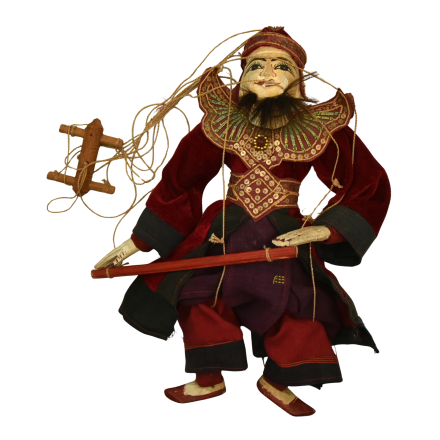 Image 10 of 10