
 Image 1 of 5
 Image 2 of 5
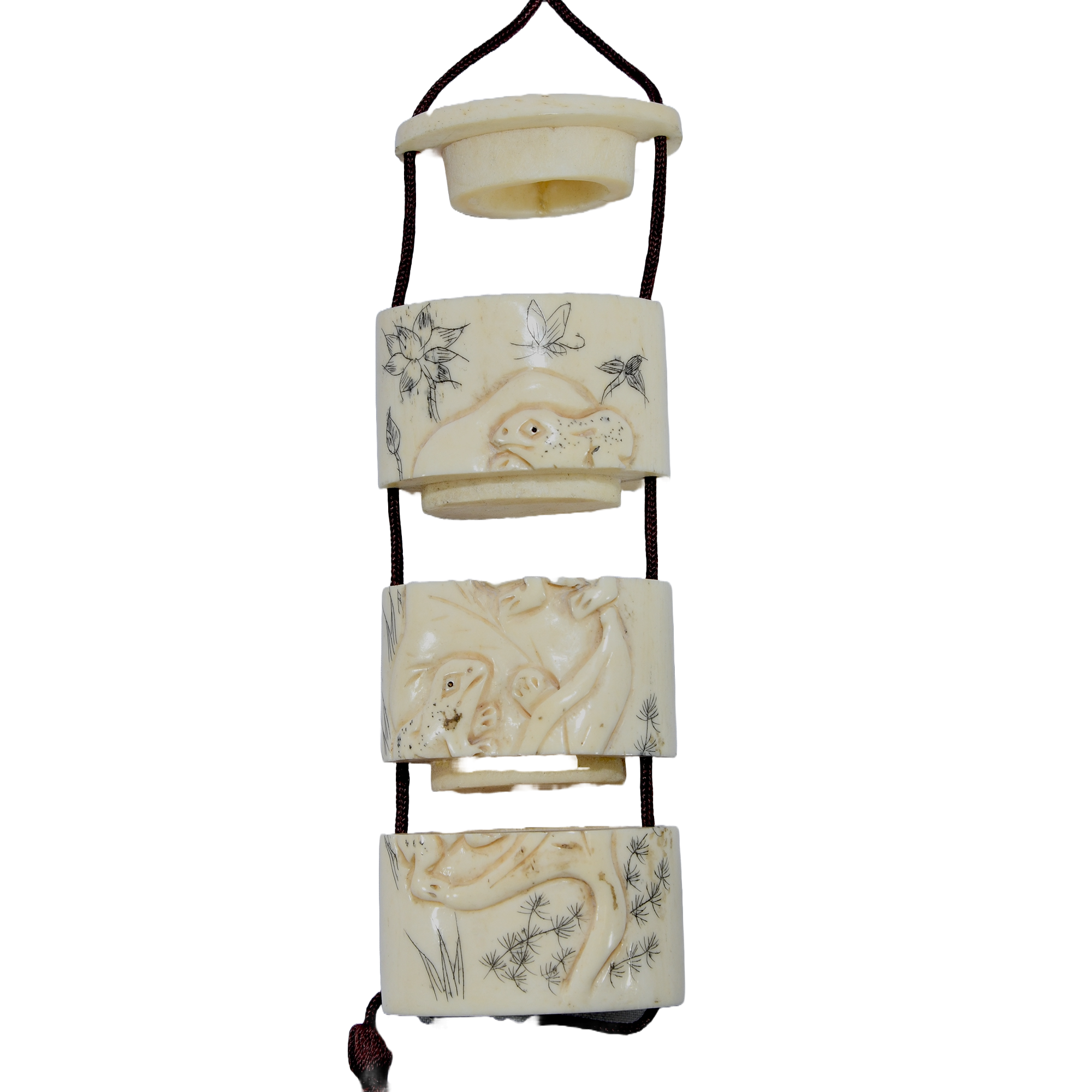 Image 3 of 5
 Image 4 of 5
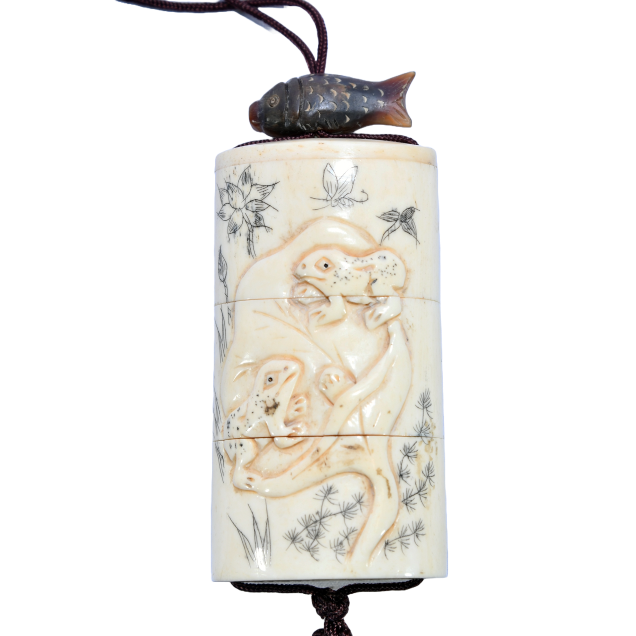 Image 5 of 5
One of a kind pieces. A tree planted with every order
A Japanese bone inro carved with frogs, with a fish-shaped ojime, a decorative knotted cord and a silk tassel.
Date: Circa early 20th century
Geography: Japan
Culture: Japanese
Dimensions: Inro 7.5cm H x 4cm W x 3cm D; overall length with cord 62cm
Weight: 92g
Material: Bone, with a cord and silk-style tassel
Condition: Good. See photos.
The inro
The inro has two compartments, which slot together and are held closed by the cord. The front is carved in relief with frogs among leaves, and the surface is decorated with engraved and lightly coloured plants and flowers.
Above the inro, the cord passes through a carved ojime (sliding bead) in the shape of a fish, which tightens the cord to keep the compartments closed. Below it, the cord is tied in a decorative mizuhiki-style knot and finishes in a long dark tassel.
In Japan, the frog (kaeru) is a popular motif because its name sounds like the word for “return”. Frogs are often linked with safe journeys home and the return of good fortune.
About inro
Traditional Japanese clothing had no pockets, so small items such as medicines and seals were carried in an inro, hung from the sash of the kimono by a cord.
The inro is made of bone, not ivory.
As with all our antique and vintage pieces, this inro is one of a kind, and natural signs of age, wear and handling should be expected as part of its authentic character. Dimensions and weight are approximate.